The Skingularity: A Choice Between Two Skins
When Ancient Wisdom Meets Silicon Valley
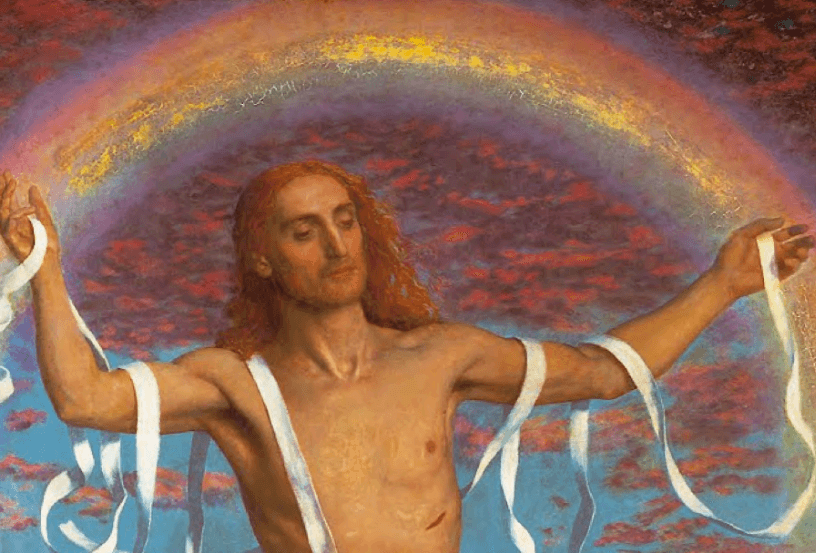
We stand at an extraordinary threshold in human history, a moment when decisions made in the next few years will determine the trajectory of our species for generations to come. The question before us is deceptively simple, yet its implications reach into the deepest mysteries of what it means to be human: What kind of skin will we wear? For nearly five thousand years, spiritual traditions across the world have spoken of a luminous garment, a second skin or power cloak that transforms its wearer into something more than human. This shimmering raiment appears in Egyptian tomb paintings, Tibetan thangkas, Christian icons, and Gnostic texts. It is called by many names: the Robe of Glory,* the Armor of God,* the Rainbow Body,* the Karast.* Behind all of these names lies a single teaching: human beings possess the capacity to transform their physical bodies into vessels of light, and the recovery of this original perfection is the great project of human existence. What most do not realize is that this same ancient quest is now being pursued with breathtaking speed and resources by the technologists of Silicon Valley, Tokyo, and Shanghai. They too are creating a new skin for humanity, a technological second skin woven from nanobots, sensors, and smart materials that promises to make us magnificent. They call it e-skin or i-skin. I call it the Skingularity. The convergence of these two paths, one ancient and spiritual, the other modern and technological, presents humanity with a choice that each of us will soon have to make. One skin is pink and organic, achieved through love and spiritual discipline. The other is grey and inorganic, achieved through technology and augmentation. Understanding both paths, and what is truly at stake in choosing between them, is the purpose of this inquiry.
The Original Garment
To understand why we seek a new skin, we must return to the beginning, to the alpha of the story that has guided Western civilization toward its omega point. In Judeo-Christian thought, humans once existed as perfect beings in a timeless place of pure light and love called Eden. According to mystical Jewish tradition preserved in texts like the Zohar,* Adam and Eve originally possessed bodies of light rather than bodies of flesh. As the Zohar states, when Adam dwelt in the garden of Eden, he was clothed in the celestial garment, which is the garment of heavenly light. This starry cloak, smooth as a fingernail and beautiful as a jewel, never wore out. Adam and Eve were also covered with a cloud of glory, meaning they glowed rays of rainbow light. After the Fall, after Eve received knowledge from the bright Serpent, humanity was expelled from Eden. A gate was constructed and guarded by angels to prevent our return. And in place of our original bodies of light, we were given garments of human skin. We discovered we were naked. Since that primordial moment, the great project of humanity has been to remember our divinity and to transcend, transform, or perfect our flesh back into light. We seek to restore ourselves to our original state, to pass back through the guarded gate, to eat once again from the Tree of Life. This is the core guiding myth of Western civilization, and it explains why both mystics and technologists pursue the same goal, even if their methods diverge radically.
The Armor of God
In his letter to the Ephesians,* written while imprisoned in Rome around 62 AD, the apostle Paul gave advice that has echoed through the centuries. He warned of a coming battle, not against flesh and blood, but against principalities, against powers, against the rulers of the darkness of this world, against spiritual forces of evil in heavenly realms. His counsel was direct: put on the full armor of God. Paul describes this armor in specific detail: the belt of truth, the breastplate of righteousness, the shield of faith, the helmet of salvation, the sword of the Spirit. These are not merely metaphors. They represent actual spiritual capacities or what we might today call apps that humans can acquire and embody. When we put on this armor, we are sealed in a sacred power or energy that is cosmic, supernatural, and superhuman. We gain access to realms off limits to humans clothed only in ordinary skin. The High Priest of Israel wore precisely this armor when entering the Holy of Holies, the innermost chamber of the Temple of Solomon that was understood as a recreation of the Garden of Eden. By donning the breastplate of righteousness and the other sacred vestments, the High Priest was preparing to return to the original pure state of Adam and to enter heaven itself. What Paul understood, and what the mystery schools of the ancient world all taught, is that this luminous armor is woven from acts of love. The Gnostic text known as the Hymn of the Pearl* compares the formation of the Robe of Glory to the formation of a pearl. Just as a pearl grows layer upon layer around a grain of sand, so the robe of light grows through layer upon layer of love, compassion, and righteousness. No acts of love, no Robe of Light. This is why another name for this shining garment is the Garment of Love, and why love is the way to perfection.
The Rainbow Light Body
The promise of transformation into a body of light is not unique to the Christian tradition. It appears across cultures and millennia with remarkable consistency, suggesting that it points to an actual capacity latent within the human form. In Tibet, the tradition of the Rainbow Body or Jalü* represents the pinnacle of spiritual attainment. Practitioners of the Great Perfection* teaching are said to dissolve their physical bodies at the moment of death, leaving behind only hair and fingernails, while their consciousness transforms into a vortex of five-colored rainbow light. This achievement has been documented in recent times, with witnesses reporting the gradual shrinking and dissolution of the practitioner’s body over a period of days, accompanied by the appearance of rainbow lights and other signs. The great master Padmasambhava,* who brought Buddhism to Tibet in the eighth century, is depicted in traditional paintings surrounded by rainbow light, holding symbols of spiritual power that are remarkably similar to those held by the Risen Christ in Christian iconography. Both figures wear crowns of light. Both hold staffs that open the gates to higher realms. Both are surrounded by rainbow halos. The correspondence is too precise to be coincidental. In ancient Egypt, the transformation into a luminous being was called becoming an Akh* or achieving the Karast.* The resurrection of Osiris, reassembled and restored by Isis, provided the template for every Egyptian who sought to become a shining one among the stars. The god Ptah, master of technology and craftsmanship, was said to fashion the resurrection garment that enabled this transformation, a many-colored and feathered cloak that appears in tomb paintings across the dynasties. What all of these traditions share is the understanding that the human body is not fixed but is capable of profound transformation. Through spiritual practice, through purification, through the cultivation of love and wisdom, the dense matter of our flesh can be refined into something radiant and imperishable. This is not escape from the body but rather its perfection, its completion, its fulfillment.
The Second Adam
For Christians, the demonstration of this transformation came through Jesus Christ, the Second Adam who came to restore what the first Adam lost. At his Baptism by John the Baptist, Jesus received the transmission of the Robe of Light, symbolized by the descent of the Holy Spirit in the form of a dove. At the Transfiguration on Mount Tabor, his disciples witnessed his face shining like the sun and his garments becoming white as light. And at the Resurrection, he completed the transformation entirely, dissolving his flesh body and replacing it with a body of light. The Shroud of Turin,* whatever one believes about its origins, presents us with an image that is consistent with this teaching. The figure on the cloth appears to have been produced by some form of radiant energy emanating from within the body, leaving its image upon the linen as Jesus translated from flesh into light. As the Gnostic Gospel of Philip states: The lord rose from the dead. He became as he was, but now his body was perfect. He possessed flesh, but this was true flesh. Our flesh is not true. Ours is only an imitation of the true. Christian prophecy holds that at the Second Coming, those who have prepared themselves will undergo the same transformation. As Paul writes to the Corinthians, we shall all be changed, in a moment, in the twinkling of an eye. Our lowly bodies will be transformed to be like his glorious body. We shall bear the image of the man of heaven just as we have borne the image of the man of dust. This transformation is not merely individual but cosmic. The creation itself, Paul tells us in Romans, will be liberated from its bondage to decay and brought into the freedom and glory of the children of God. Raising the earth and raising the body go hand in hand. Our perfection participates in the perfection of all things.
The Religion of Technology
What most do not know is that the Western pursuit of technology has, from its very beginnings, been driven by this same vision of human perfection and return to Eden. The acclaimed historian David F. Noble documented this remarkable connection in his book The Religion of Technology.* He traces how, beginning in the early Middle Ages, Christian monks began to view technological advancement as a divine gift that could assist humanity in recovering the original perfection of Adam. When improvements to the plow allowed farmers to till more soil with less effort, it was seen as evidence that humanity was gaining mastery over nature, just as Adam had possessed before the Fall. Technology was bringing us closer to paradise. By the twelfth century, this conviction had crystallized into a powerful movement. The mystical theologian Joachim of Fiore* predicted that the Second Coming was imminent and that humanity could actively prepare for and bring about the Millennium through technology and spiritual practice. Franciscan monks took up this vision with extraordinary energy, pioneering new technologies while simultaneously seeking spiritual perfection through contemplative practice. Francis Bacon,* the father of modern science, was explicit about the connection. In his visionary work The Great Instauration, he stated that his aim was to demonstrate how the mind of humanity might be restored to its perfect and original condition. His novel The New Atlantis imagines a society of wise men who use technology to attain an angelic state, the perfect state of Adam before the Fall. Bacon prophesied the curing of all diseases, the prolongation of life, the transformation of humans into other bodies, and the making of new species. Every great English scientist of the seventeenth century, from Robert Boyle to Isaac Newton, believed in the prophecies of the New Jerusalem, the Second Coming of Christ, and the appearance of what Newton called the Sons of the Resurrection. The pursuit of scientific knowledge was, for them, inseparable from the pursuit of spiritual perfection. This is the lineage that leads directly to Silicon Valley.
The Skingularity
In December 2001, an extraordinary gathering took place in Hawaii. Scientists, technologists, and futurists came together for a government-sponsored conference called Converging Technologies for Improving Human Performance. Four advanced technologies were identified as the keys to transforming the human condition: Bits, or computer science. Atoms, or nanotechnology. Neurons, or brain science. Genes, or biological science. Put together, the first letters of these four domains spell BANG. And the convergence of these technologies is indeed producing a kind of big bang in human capability. Between now and 2030, these technologies are projected to merge into what futurists call the Skingularity: a seamless technological skin for humanity with enhanced physical attributes including superintelligence, super strength, extended longevity, and even shape-shifting. This new skin, the i-skin or e-skin, would interface directly with the Internet of Things* and the Cloud,* connecting human beings into a vast networked intelligence. The largest corporations in the world are racing to develop this technology. Google’s Ray Kurzweil* speaks openly of nanobots that will swim through our bloodstream, connect our brains to cloud computing, and create a synthetic neo-cortex that expands our intelligence to the size of billions of networked minds. He envisions a nutrient garment woven from nanotubes that would slip nanobots in and out of our bodies through the skin, managing our health, our cognition, and our connection to the global network. The parallels to the ancient Robe of Glory are striking. Kurzweil speaks of a garment. He speaks of perfection. He speaks of transcendence and immortality. He even speaks of infusing the universe with Spirit as the ultimate outcome of technological evolution. The very words of the transhumanist prophecy echo the words of Christian prophecy, translated into the language of technology. Russian entrepreneur Dmitry Itskov has announced the 2045 Avatar Project, which aims to achieve immortality by creating holographic copies of human consciousness. The final stage of his project, Avatar D, would transfer all of our life data into a holographic light body. The Dalai Lama himself has offered support for this research, saying it could be of great benefit to humanity. The technologists believe they are creating heaven on earth. They believe they are fulfilling the ancient promise of resurrection and immortality. They may even be right that they are continuing a project that began with medieval monks contemplating how to use technology to recover the perfection of Adam. But something essential is missing.
The Predator
In his letter to the Ephesians, Paul makes clear that the reason we need the Armor of God is not merely to improve ourselves but to protect ourselves from predatory powers and spiritual forces of evil in the hierarchy of heavenly realms that seek to impede our rise. This warning appears across spiritual traditions with remarkable consistency. The Gnostic texts discovered at Nag Hammadi in 1945 contain extensive warnings about beings called Archons,* rulers or authorities who consider themselves masters of humanity. These beings intrude mentally and psychologically, invading the human mind and deviating us from our proper course of spiritual evolution. They penetrate our story-telling capacity, our ability to construct narratives about who we are and what we are capable of becoming. The Yaqui sorcerer Don Juan, as documented by Carlos Castaneda, taught that there is an alien predator that feeds on human awareness. By allowing ourselves to be immersed in destructive emotions such as fear, anxiety, anger, and competitiveness, we diminish what Don Juan calls our shining coat of awareness, thus serving the alien agenda. However, through discipline and by removing the self from our focus of existence, we can rebuild this shining coat to its natural size. At that point, the predators become bewildered. An inedible glowing coat of awareness is not part of their cognition. The Gospel of Philip states the principle directly: The powers do not see those who are clothed in the perfect light, and consequently are not able to detain them. Not only will they be unable to detain the perfect man, but they will not be able to see him. This is the dimension that the transhumanist vision does not address. If we augment ourselves with technology that connects our minds to the Cloud, who controls the Cloud? If we embed sensors and nanobots throughout our bodies, who has access to the data they collect? If we become human being things enmeshed in the Internet of Things, what new forms of predation become possible? The history of technology is not only a history of liberation. It is also a history of surveillance, control, and manipulation. The same technologies that promise to make us magnificent also promise to make us trackable, programmable, and controllable in ways that have never before been possible. Every smart device is an open book waiting to be read by watching eyes.
The Choice
We are being tested. The ancient traditions all agree on this point. The path to perfection is not easy, and there are forces that would prefer we never attain it. Whether we understand these forces as literal beings, as psychological complexes, or as structural features of a universe that demands growth through challenge, their effect is the same. We must choose wisely. One path to a new skin is organic. It requires love, discipline, purification, and the patient work of spiritual transformation over the course of a lifetime or many lifetimes. It does not depend on technology, on corporations, or on connection to any network controlled by others. The Rainbow Light Body is woven from acts of love, and no one can take it from you because it is you, perfected. The other path is technological. It promises faster results, quantifiable improvements, and participation in a collective intelligence that transcends individual limitation. It requires submission to networks, to systems, to terms of service. It creates dependencies that may be difficult or impossible to reverse. The smart skin is woven from nanobots and code, and it connects you to the Cloud whether the Cloud serves your interests or not. Perhaps there is a third way, a synthesis in which technology serves spiritual development rather than replacing it. Perhaps the tools being developed can assist seekers in attaining the organic Rainbow Light Body rather than substituting a technological imitation. Perhaps the test is precisely to develop the discernment to use these powerful new capacities wisely. What is clear is that the decisions we make now, individually and collectively, will shape human existence for centuries to come. The Skingularity is near. The ancient promises of transformation and perfection are being fulfilled, though perhaps not in the way the prophets imagined. And each of us must decide what kind of skin we will wear into the future that is rapidly approaching. The Robe of Glory is not merely ancient history. It is an invitation, extended across millennia, to discover what we are truly capable of becoming. May we choose wisely. May we choose love.
Continue the Journey
This article offers only a glimpse into the extraordinary convergence of ancient spiritual teaching and modern technology that I explore in depth in my complete work, *The Skingularity is Near*. In the full ebook, I trace the history of the Robe of Glory from the gods of ancient Sumer and Egypt through the mystery schools of Greece, the Essene communities of Palestine, and the mystical traditions of Tibet. I examine the specific technologies now being developed, from smart skin and nanobots to brain-cloud interfaces and avatar bodies. And I offer practical guidance for those who wish to pursue the organic path of spiritual transformation in an age of technological acceleration.
About William Henry
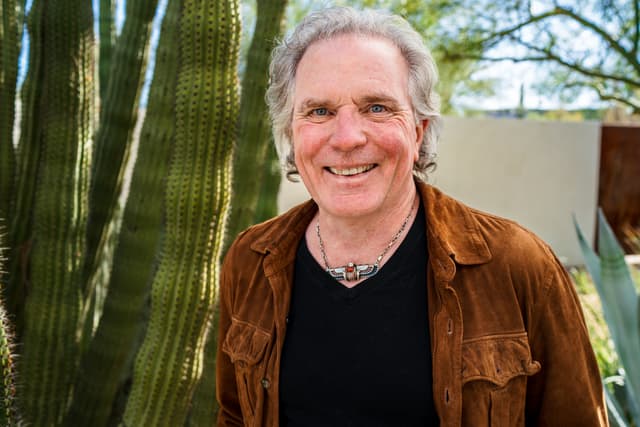
William Henry is a Nashville-based author, investigative mythologist, and TV presenter. He is an internationally recognized authority on human spiritual potential, transformation and ascension.
He has a unique ability to incorporate historical, religious, spiritual, scientific, archaeological and other forms of such knowledge into factually-based theories and conclusions that provide the layperson with a more in-depth understanding of the profound shift we are actually experiencing in our lifetime.
Related Articles
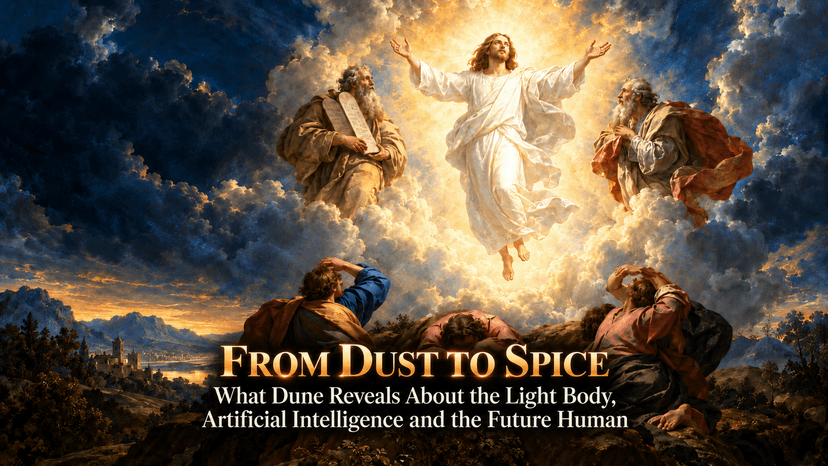
From Dust to Spice
On Arrakis, spice hidden in the desert dust expands consciousness and enables humanity to travel between worlds. But Dune also warns that extraordinary powers, extended life and technological enhancement are not the same as spiritual transformation.
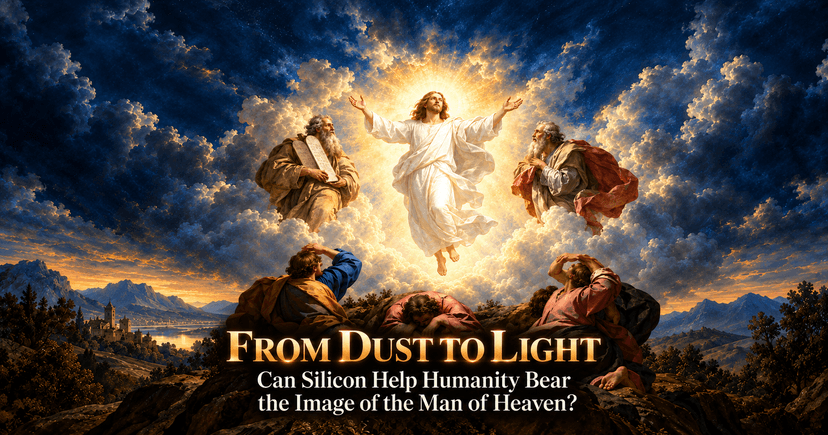
From Dust to Light
Humanity was formed from earthly dust and animated by divine breath. As carbon bodies become increasingly integrated with silicon intelligence, can technology help awaken our latent capacity for transformation—or will it merely create a convincing simulation of the human light body?
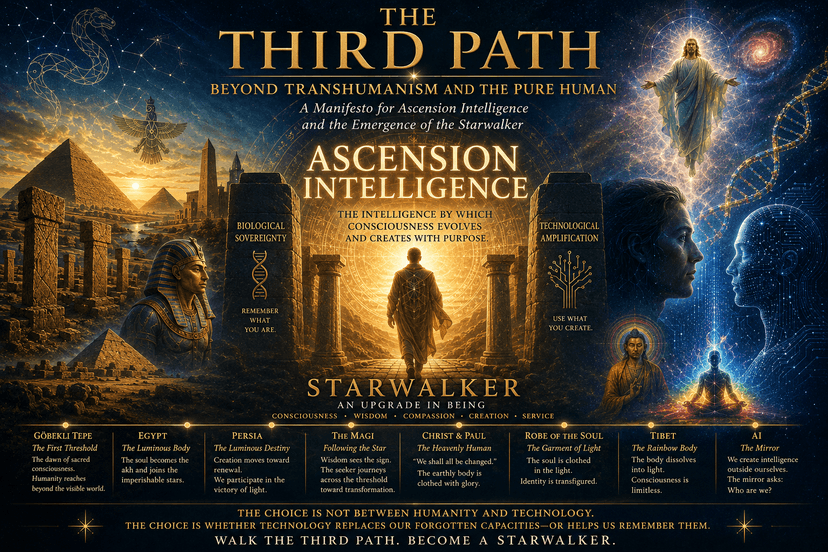
The Third Path
Humanity is being offered a false choice: remain biologically “pure” or merge with our machines. There is a Third Path—one that uses technology without surrendering to it, awakens the latent capacities of the human being, and points toward an ancient possibility: the emergence of the Starwalker.