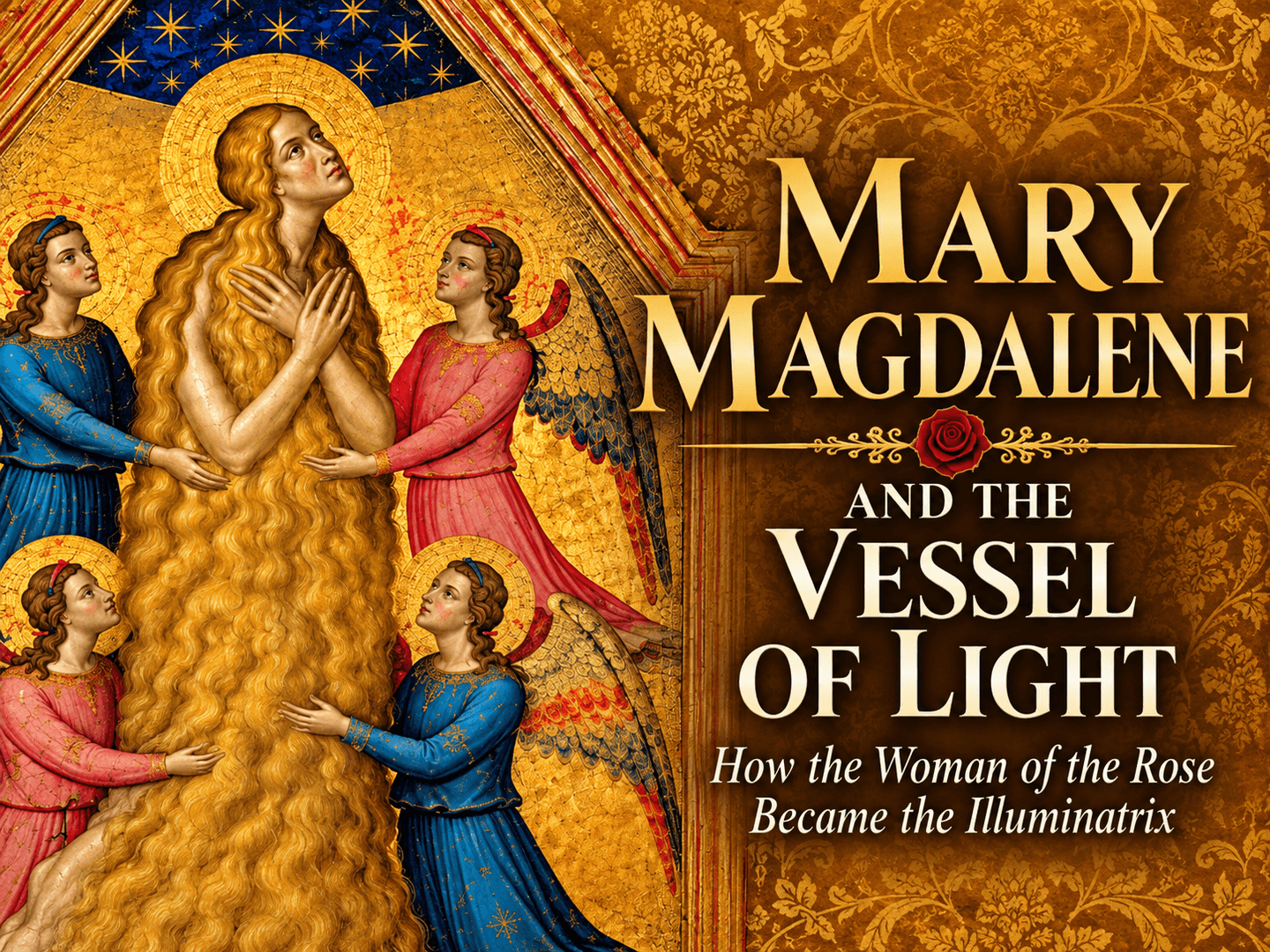
Mary Magdalene and the Vessel of Light
How the Woman of the Rose Became the Illuminatrix
In my previous investigation, “Mary Magdalene and the Secret of the Rose,” I followed a trail that began with a question. Where did Mary Magdalene's rose symbolism originate?
I followed the symbol trail from an alabaster vessel, a precious substance, a preparation or elixir, an anointing, a fragrance, and, ultimately, a Rose.
Magdalene unites all of them.
The trail led to medieval Provence, where an extraordinary liturgical text associated with Mary Magdalene's relics calls her:
ROSA RUBENS ET NOVELLA.
The Red and Newly Blossoming Rose.
Even more remarkably, the same Office declares:
Magdalenae velut rosa, corpus fragrat saeculo.
Like a rose, Magdalene's body perfumes the world.
That discovery suggested a remarkable transformation in the medieval imagination.
At the beginning of her story, Mary carries the fragrance in a vessel.
At the end, Mary herself has become the fragrance.
But there is another dimension to the vessel that I did not explore in that article.
Light.
And following that light leads us into an even deeper mystery.
What if Mary Magdalene's famous jar was never understood merely as a container for perfume?
What if medieval Christians eventually saw the vessel as an image of Mary herself?
And what if the transformation of the vessel in art —from clay and alabaster into gold, crystal and radiant matter—mirrored what they believed was happening to Mary's own body and soul?
Because there is another forgotten medieval name for Mary Magdalene.
Illuminator or Illuminatrix.
The Woman Who Gives Light.
Jacobus de Voragine gave her this title in The Golden Legend in 1260. I used it in the title of my 2006 book, “Mary Magdalene : The Illuminator”.
Jacobus transmitted and developed an older Christian interpretation of Mary Magdalene as illuminated and illuminating. He identifies light as what she receives and communicates.
To come to this identification, Jacobus followed in the footsteps of Isadore of Seville (early 7th c.), who interprets Maria as “illuminator” or “star of the sea”. Here he means the Virgin Mary, who gave birth to the world’s light.
In the 9th century, Haymo of Auxerre, writing a commentary on Mary Magdalene announcing the Resurrection in John 20, applies both “illuminata” and “illuminatrix” to Mary Magdalene. Anthony of Padua followed, using “illuminatrix” when interpreting the women at the tomb, including Magdalene.
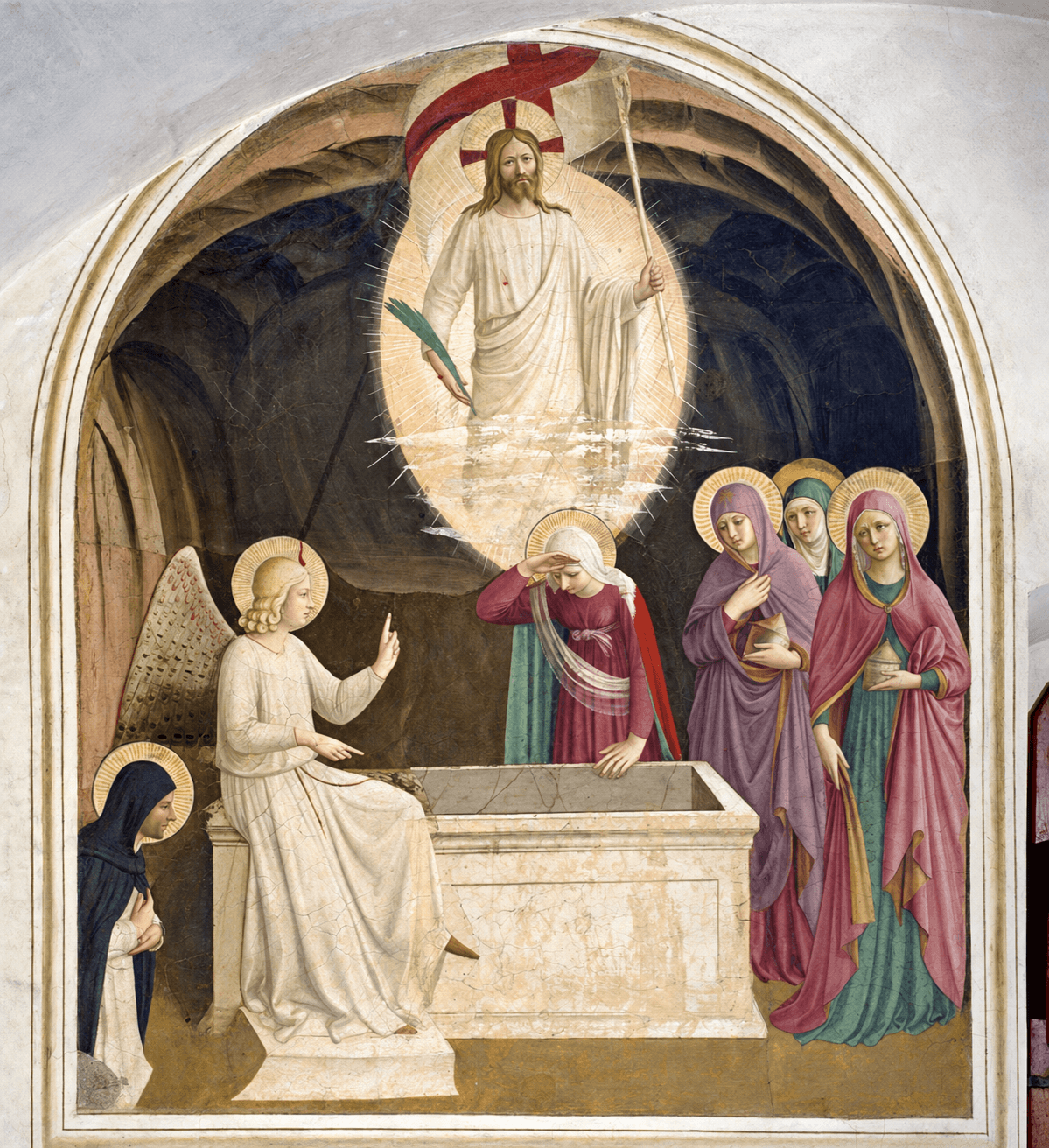
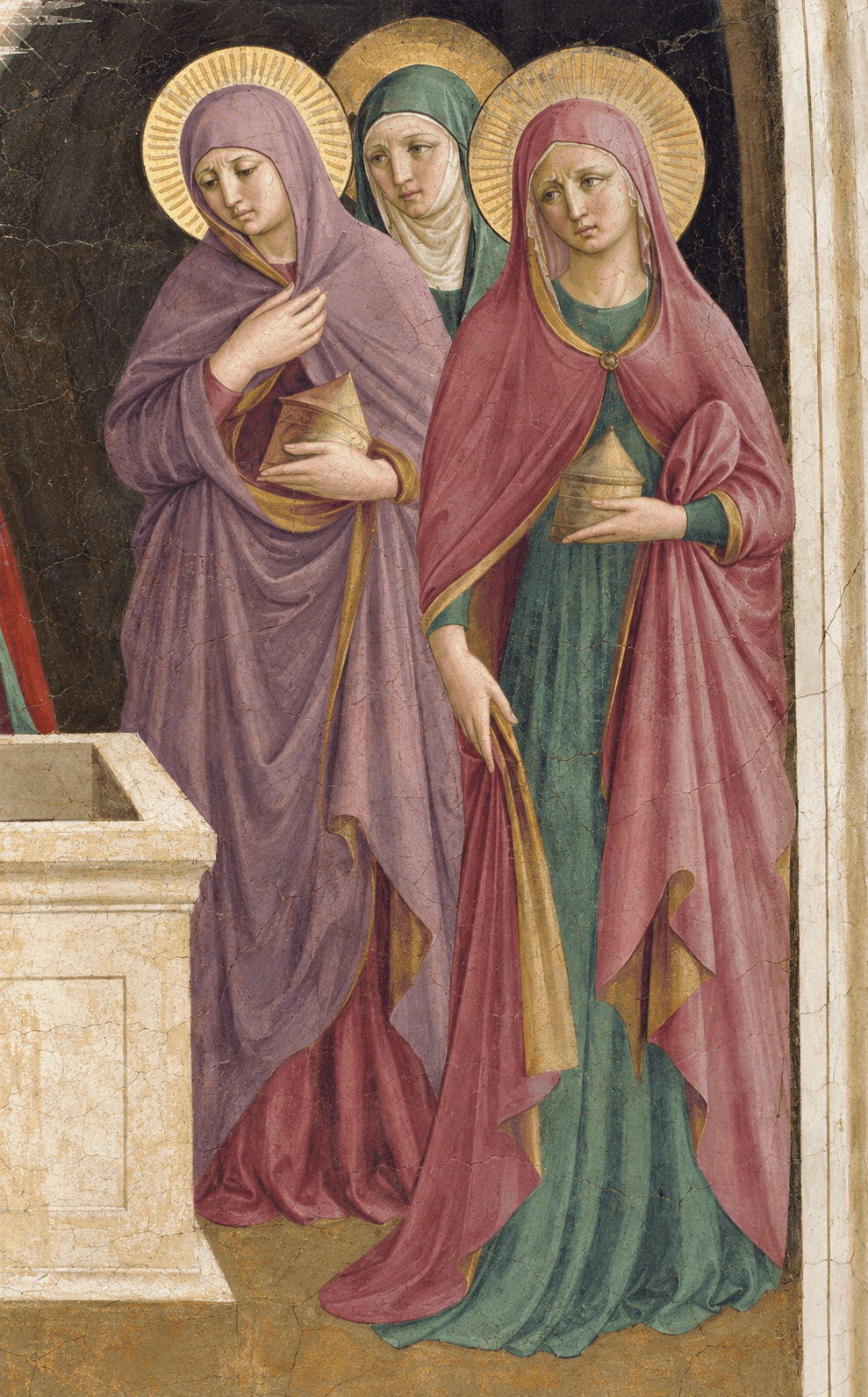
What Jacobus added was key. She is called “illuminator” because she drank eagerly what she later poured out abundantly. There she received the light with which she afterward enlightened others.
More, he says, she is called “illuminated,” because then she was illuminated in her mind by the light of the most perfect knowledge, and she will be illuminated in her body by the light of glory.
She drank the light, became illuminated, and poured that light into the world.
Welcome back to the Magdalene trail.
This time we are following the light.
THE WOMAN WITH THE VESSEL
For centuries, artists gave Mary Magdalene an object that made her instantly recognizable.
The vessel. One that transforms.
Sometimes a stone vessel.

Sometimes a golden container.
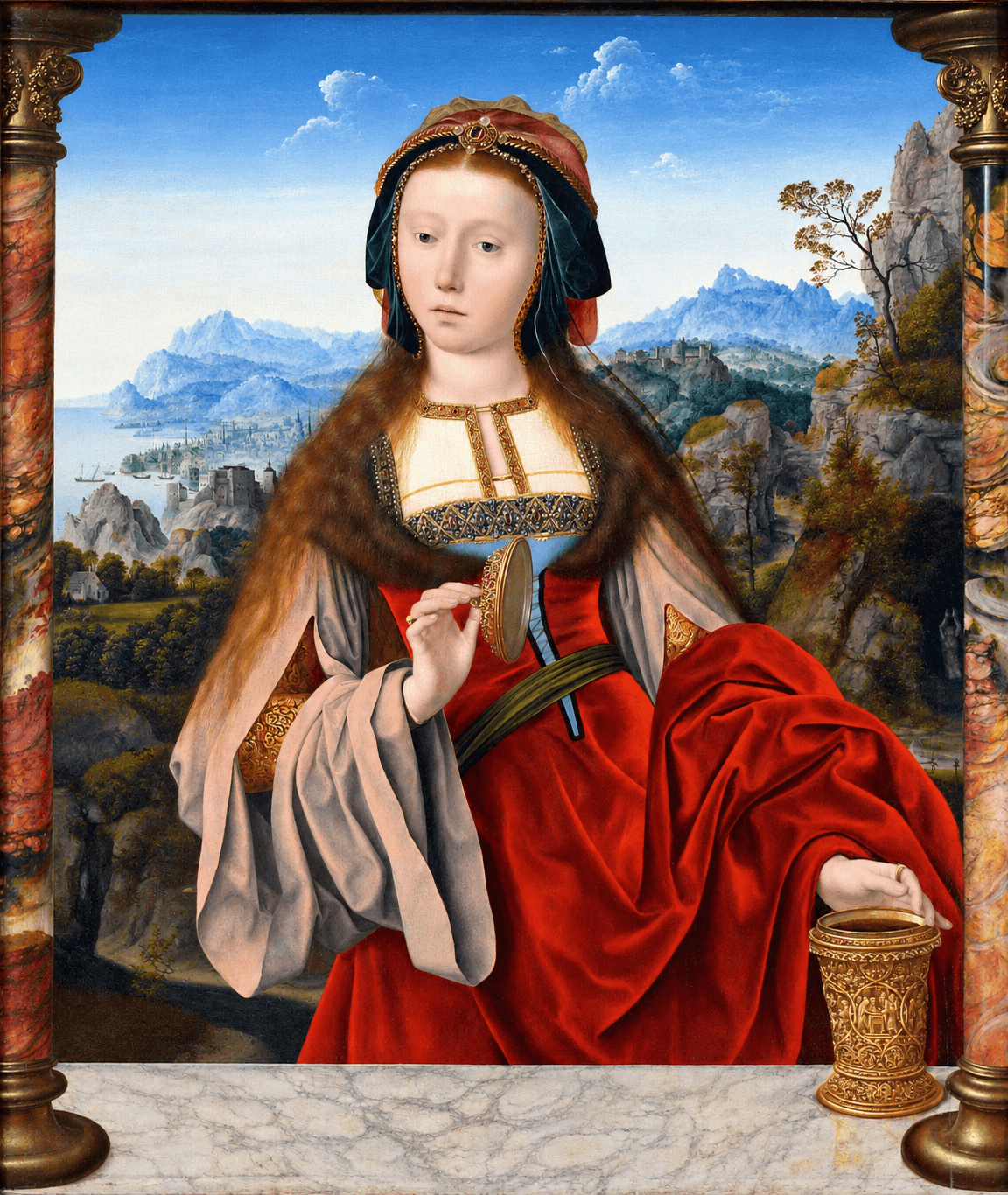
Sometimes a transparent glass vessel.
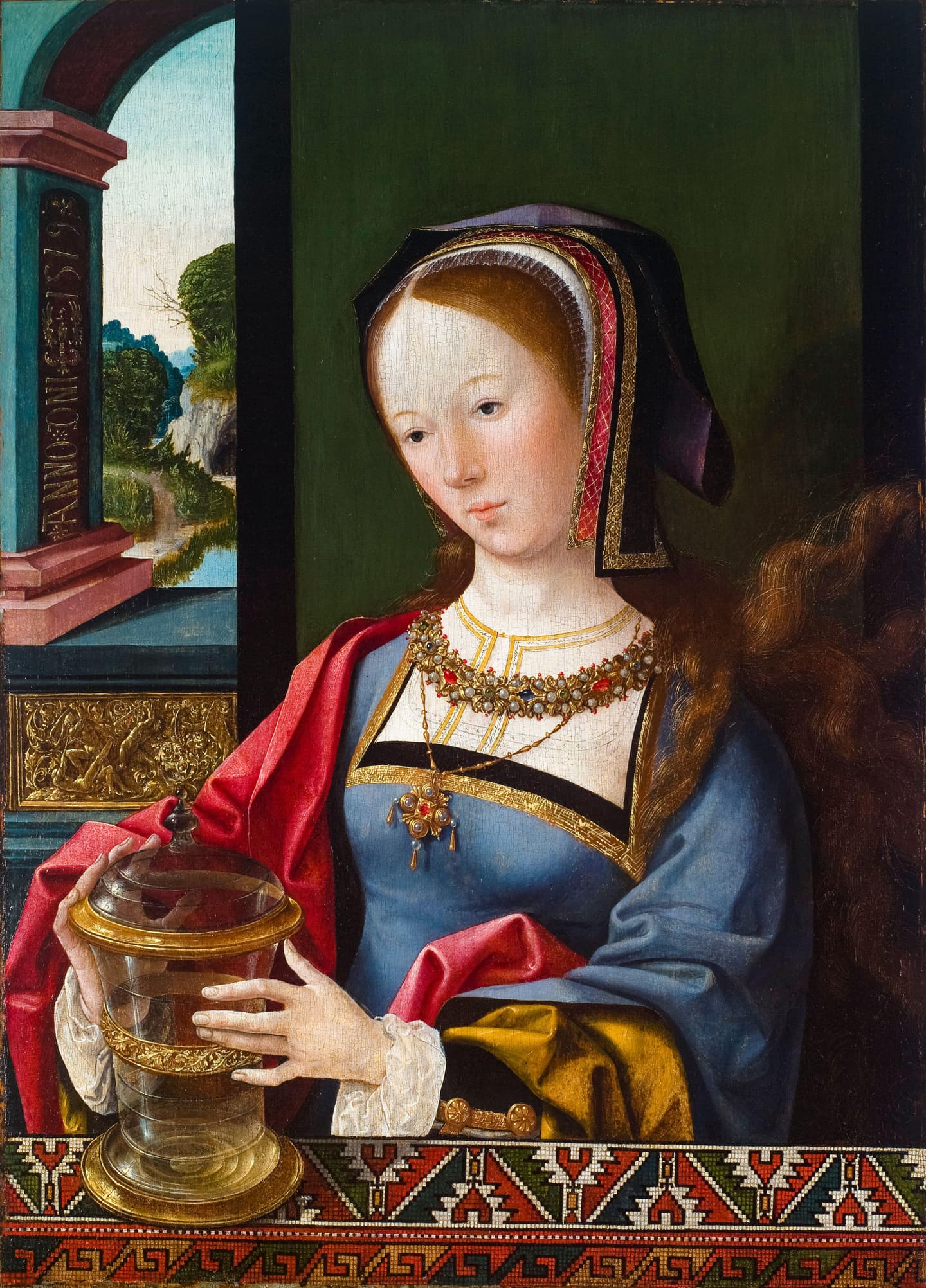
Sometimes it almost resembles a chalice.
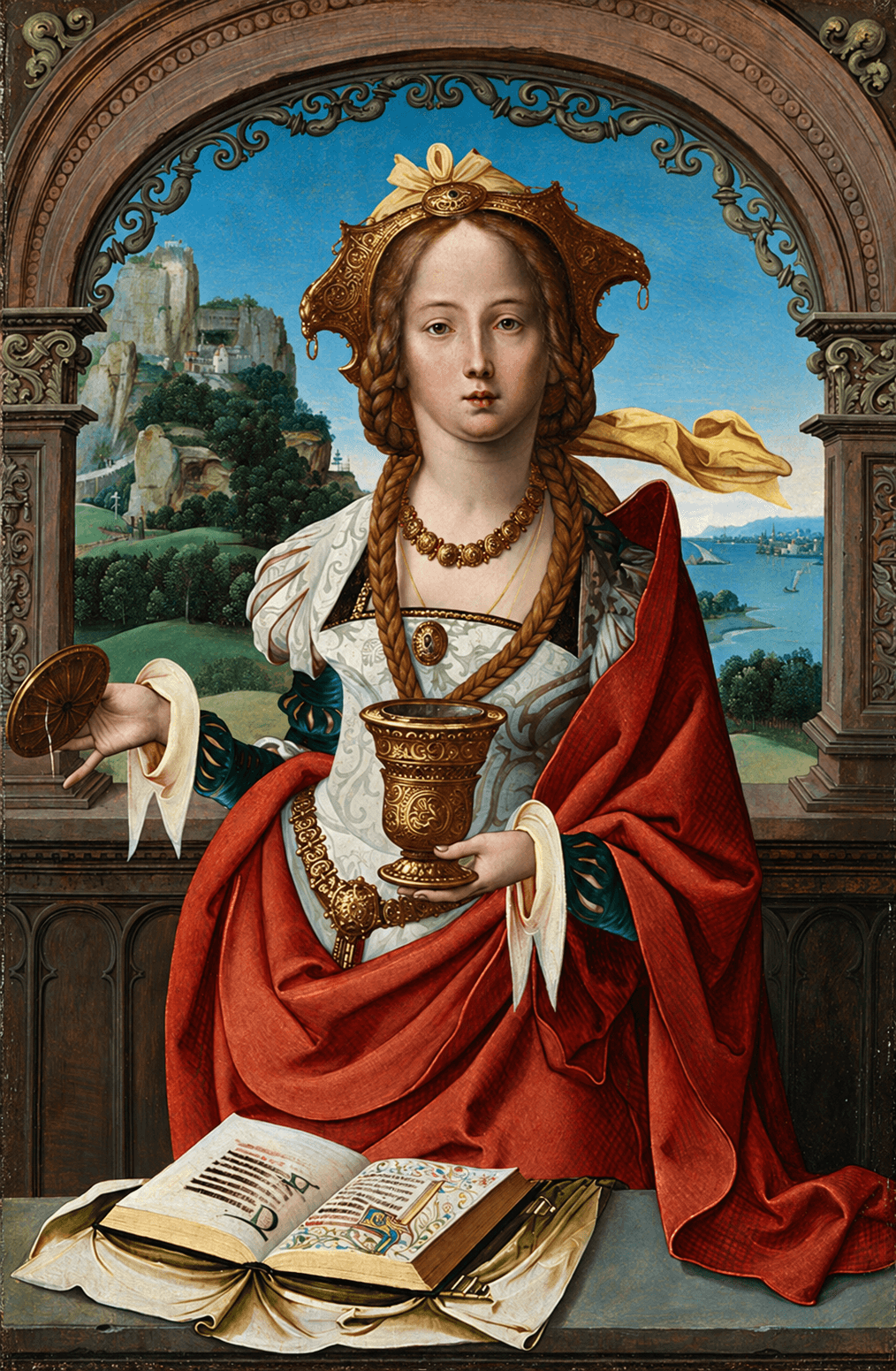
Often it accompanies a book.
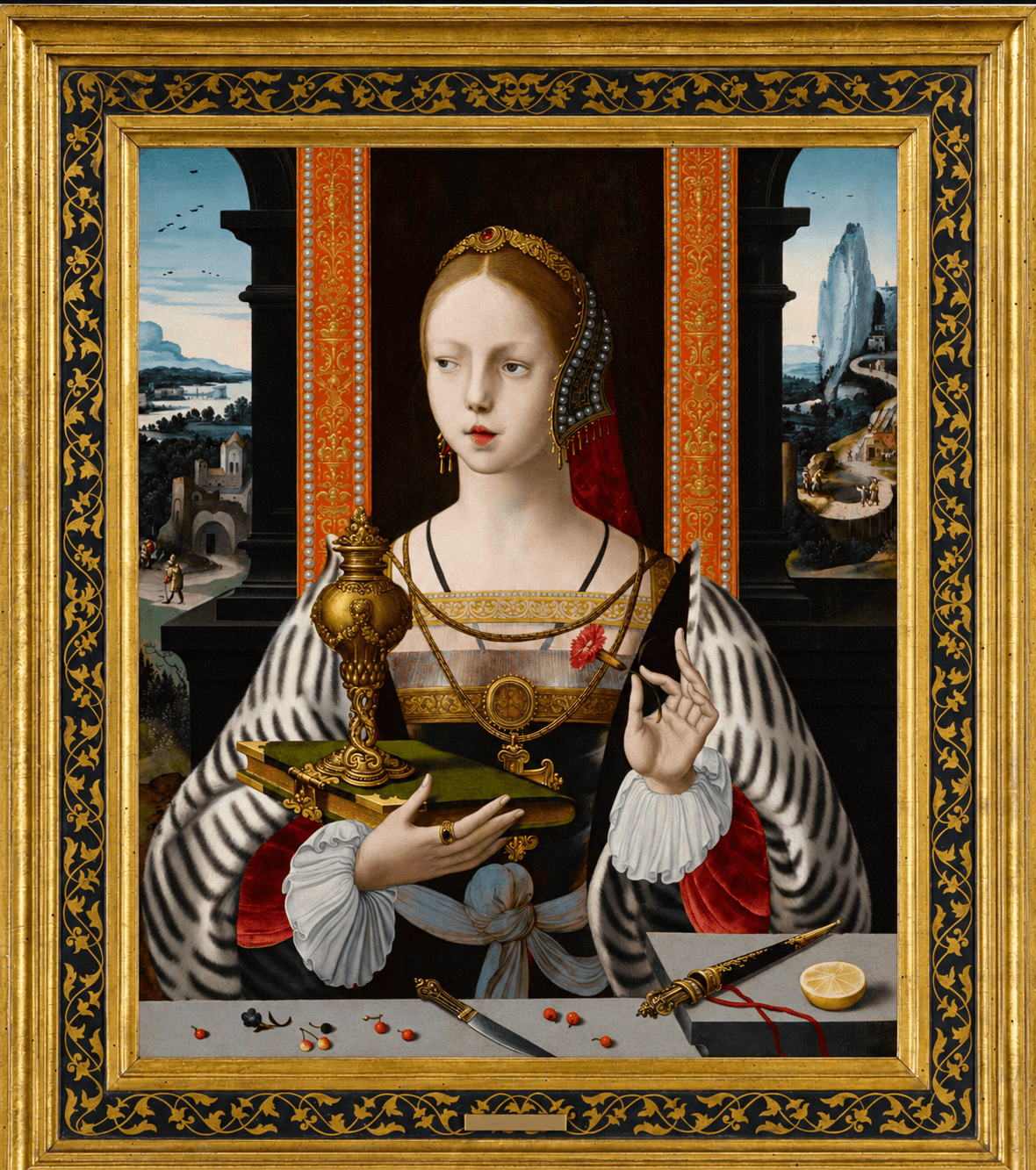
And sometimes it looks remarkably like a lamp.
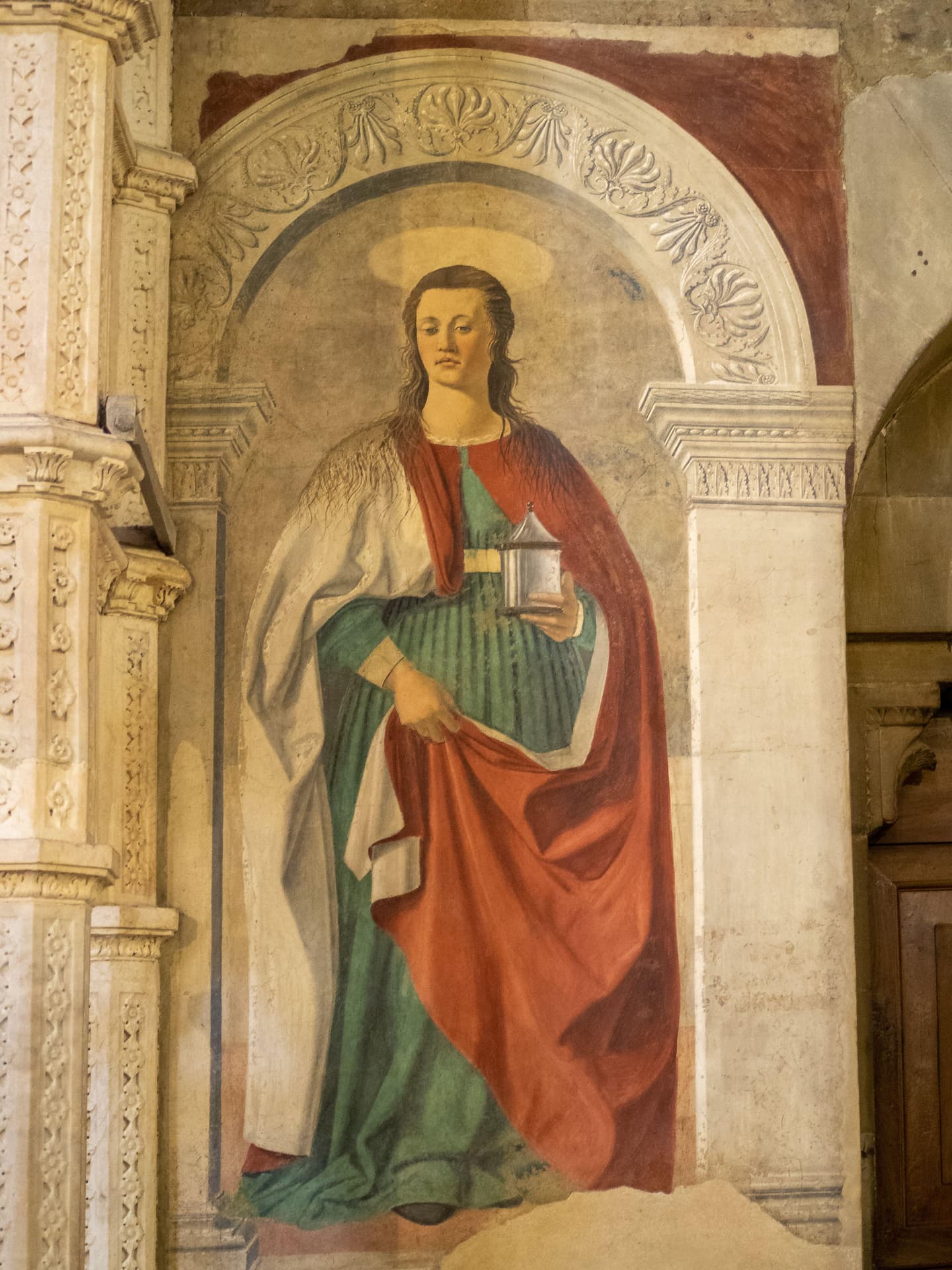
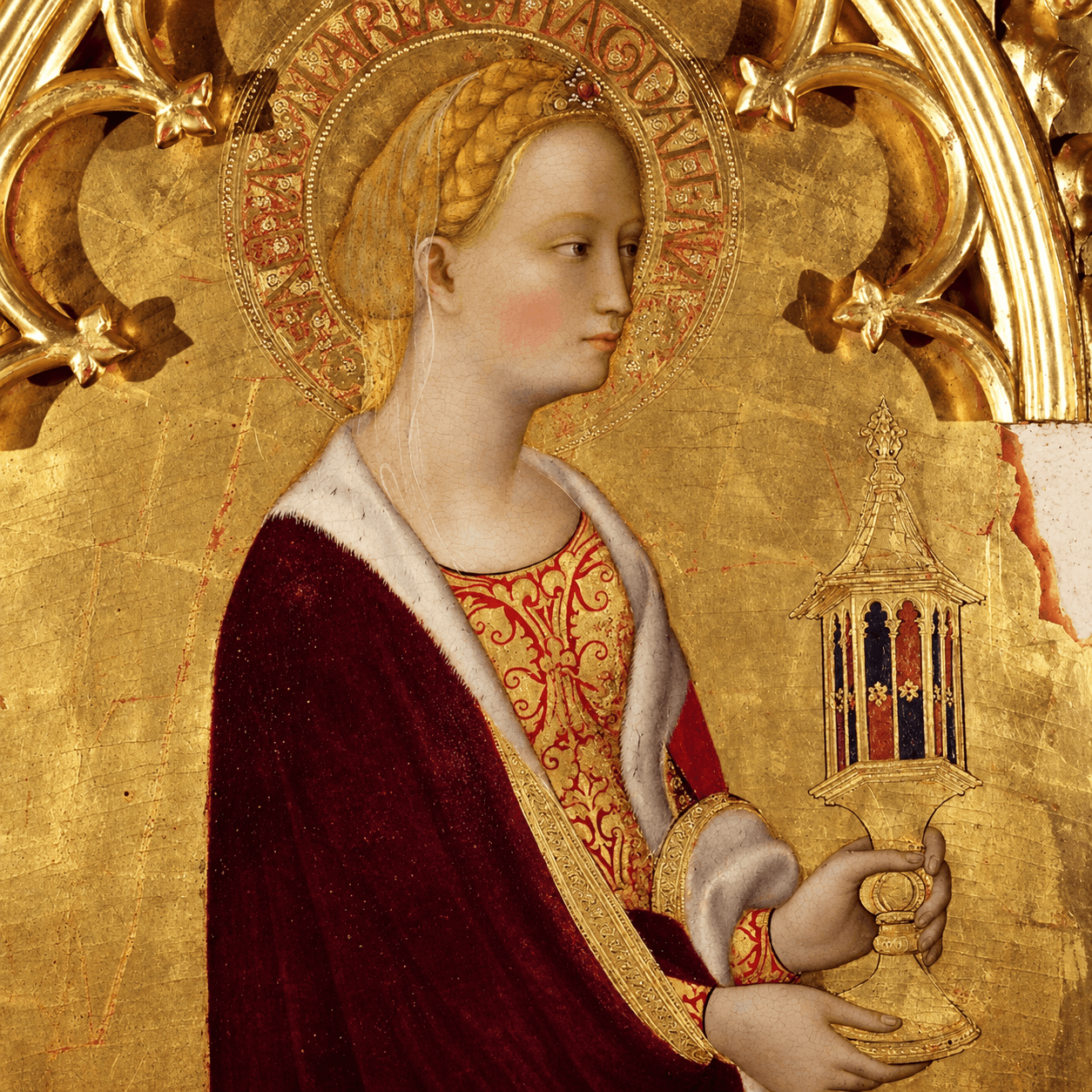
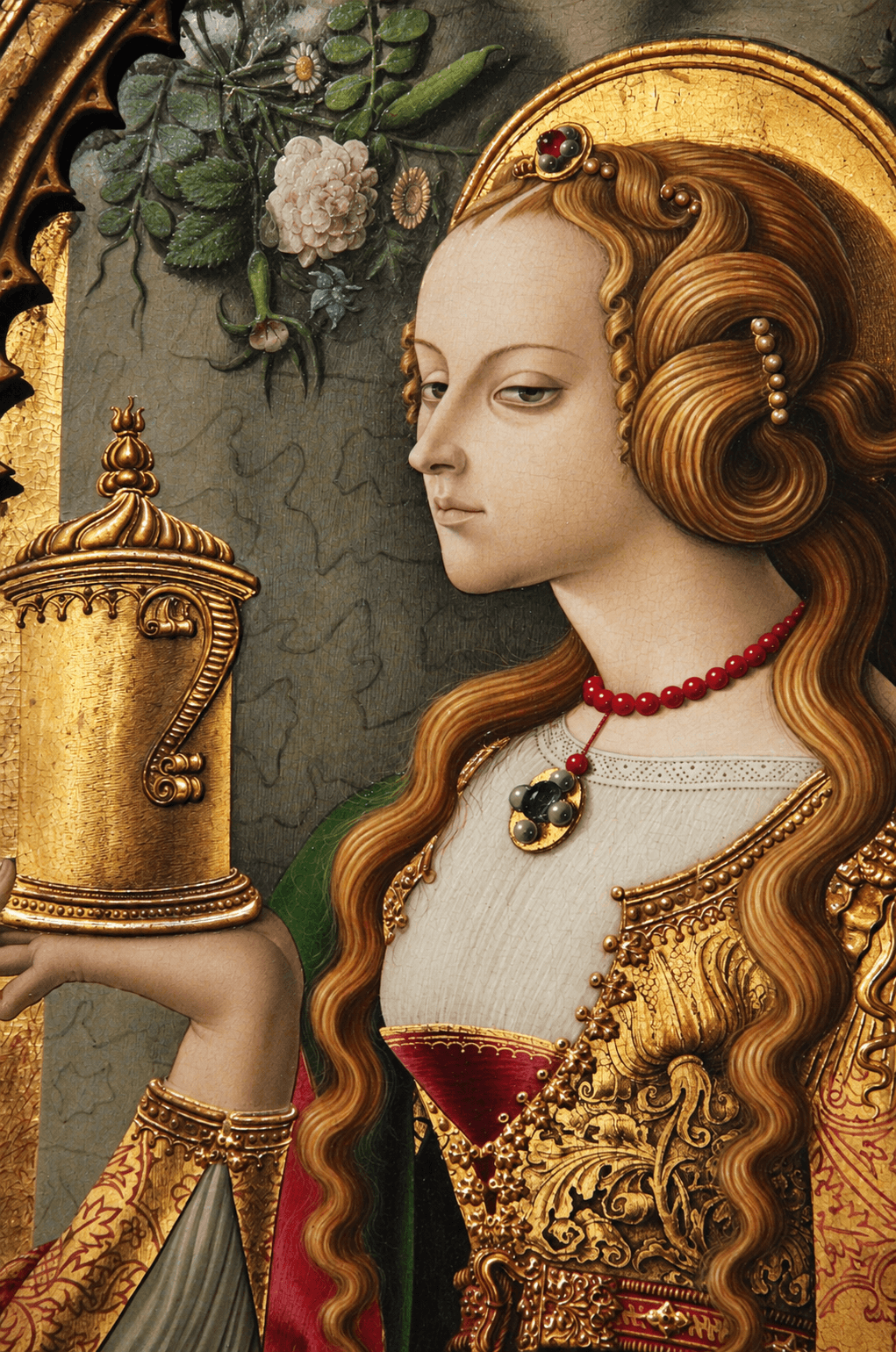
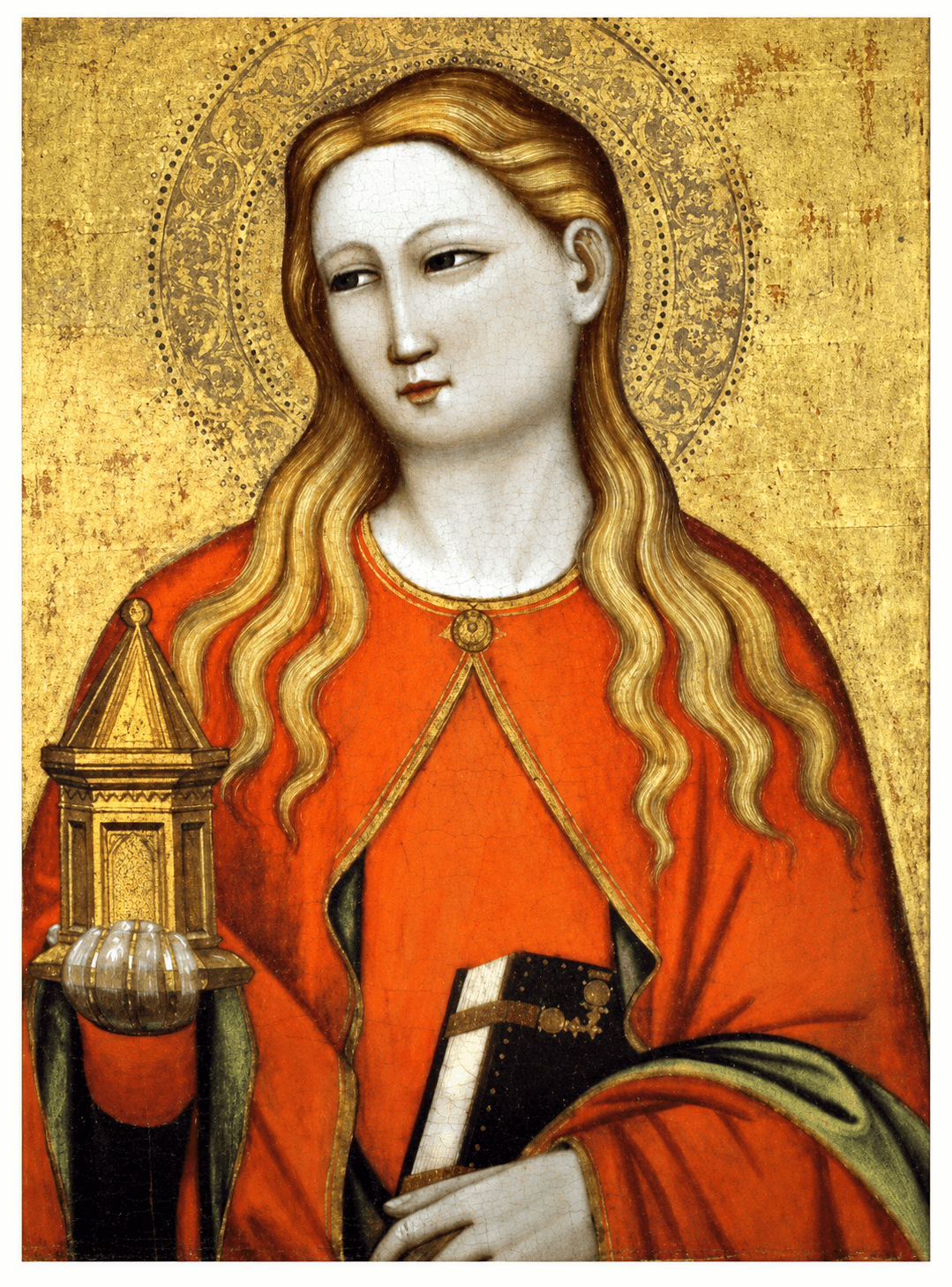
Art historian Vicki-Marie Petrick has undertaken one of the most detailed studies of this imagery in her important 2022 study, "Delving into the Magdalene's Vase: The Ointment Jar from the Middle Ages to Early Modernity". Rather than treating the jar merely as Magdalene's artistic name tag, Petrick asks what medieval viewers might have understood the vessel itself to mean.
Her findings open an extraordinary door for Starwalkers.
The jar can represent Magdalene herself. It suggests that the medieval vessel itself could signify the human body as a container capable of receiving and transmitting a sacred substance—fragrance, balm, light, grace. Petrick explicitly explores this bodily/container dimension rather than treating the jar as merely an identifying prop.
Once you know, you know. You can't turn back from the proposition that the vessel’s color change symbolizes her body's shift from flesh to light.
Modern esoteric writers did not invent this idea.
It is medieval.
One hymn describes a transformation from mud into light and finally into a “vase of glory.” The fourteenth-century Dominican preacher Jacopo Passavanti similarly imagines Magdalene referring to the fragile vessel of her own body. In a fifteenth-century dramatic representation of her conversion, Mary offers her perfume to Christ while also offering herself.
This changes how we look at hundreds of paintings of Mary Magdalene.
She is holding a vessel.
But symbolically:
she is also the vessel.
THE BODY IS THE VESSEL
The symbolism has deep Christian roots.
Genesis says we are made from dust. Clay. Dust was formed into a vessel, the human body.
Paul famously writes:
“We have this treasure in earthen vessels.” 2 Corinthians 4:7
The human body is the container.
Divine presence is the treasure.
But in Magdalene's case the metaphor becomes especially powerful because her physical attribute is already a vessel containing something extraordinarily precious.
Myron.
Fragrant oil.
Ointment.
Perfume.
The substance used for anointing.
One that was psychedelic.
And medieval writers went further.
According to Petrick's investigation, writers from Bernard of Clairvaux (founder of the Knights Templar) through Savonarola could imagine Magdalene's own heart as the place in which the perfume she offered Christ was spiritually created.
Pause over that image to catch our breath.
Mary's jar contains perfume.
But Mary's heart is also a vessel.
And within that vessel something is being distilled.
Love.
Devotion.
Grace.
Fragrance.
The outer vessel reflects the inner vessel.
The jar is Mary.
SHE BECOMES WHAT SHE CARRIES
This brings us directly back to the mystery uncovered in my previous investigation.
In the Gospel story, the vessel contains fragrance.
In medieval Provence, Magdalene's own body becomes associated with fragrance.
According to the Saint-Maximin relic tradition, when the tomb identified as hers was opened in 1279, an extraordinary perfume emerged.
The woman who carried the fragrance became fragrant herself.
And eventually Provençal liturgy could proclaim:
Like a rose, Magdalene's body perfumes the world.
The transformation is astonishing:
From vessel to perfume to body to fragrance to rose.
But Petrick's research reveals another transformation happening alongside it.
One involving light.
FROM THE GOLDEN VESSEL TO THE VESSEL OF LIGHT
Look carefully at medieval paintings of Mary Magdalene.
Her jar frequently shines.
Artists paint it gold.
They decorate it with luminous lines.
They sometimes hold it prominently against the saint's body.
And in several works Magdalene raises the vessel in a way that makes it look almost like a lamp.
Why?
Let’s return to the remarkable medieval interpretation of Magdalene's name.
She could be understood as:
Illuminata — she who receives light.
And:
Illuminatrix — she who gives light.
The same tradition could call Magdalene Mundi Lampas—the Lamp of the World, the companion to Jesus’s Light of the World.
Petrick argues that this provides a compelling context for medieval artists who depict Magdalene raising her luminous vessel almost as if she were carrying a lamp.
Suddenly, the Magdalene jar reveals another dimension.
It does not merely contain fragrance.
It can signify light.
And Magdalene does not merely receive that light.
She drinks it.
She gives it.
ILLUMINATRIX.
MARY MAGDALENE, THE ILLUMINATOR
This is especially significant because the Magdalene is the great proclaimer of the Resurrection.
John's Gospel makes expanded vision central to the Easter encounter.
Mary comes to the tomb.
She sees the stone removed.
She sees two angels in white sitting there, one at the head and one at the feet where the body of Jesus had been” (John 20:12). Luke mentions two men in shining or dazzling apparel (Luke 24:4)
She sees a man she initially believes to be the gardener.
Then comes recognition.
“Mary.”
“Rabboni.” "Teacher".
She sees the Risen One.
Medieval theologians interpreted this progression as more than ordinary eyesight. Petrick notes that they could understand Magdalene's movement from failing to recognize Christ to seeing him as a passage from spiritual blindness to sight and perfected faith.
That changes her role as the first witness.
She does not simply witness light.
She receives illumination.
Then Christ sends her to the apostles.
She carries what she has seen to them.
RECEIVE THE LIGHT.
BECOME ILLUMINATED.
TRANSMIT THE LIGHT.
Illuminata.
Illuminatrix.
THEN I FOUND SAINT LUCY
While following the iconography of Magdalene's vessel, another woman kept appearing beside her.
Saint Lucy.
Her very name evokes lux:
Light.
Lucy is associated with sight, vision, and illumination. In later art she is famously shown carrying her eyes upon a dish.
But earlier artists also depicted Lucy with something particularly interesting.
A vessel.
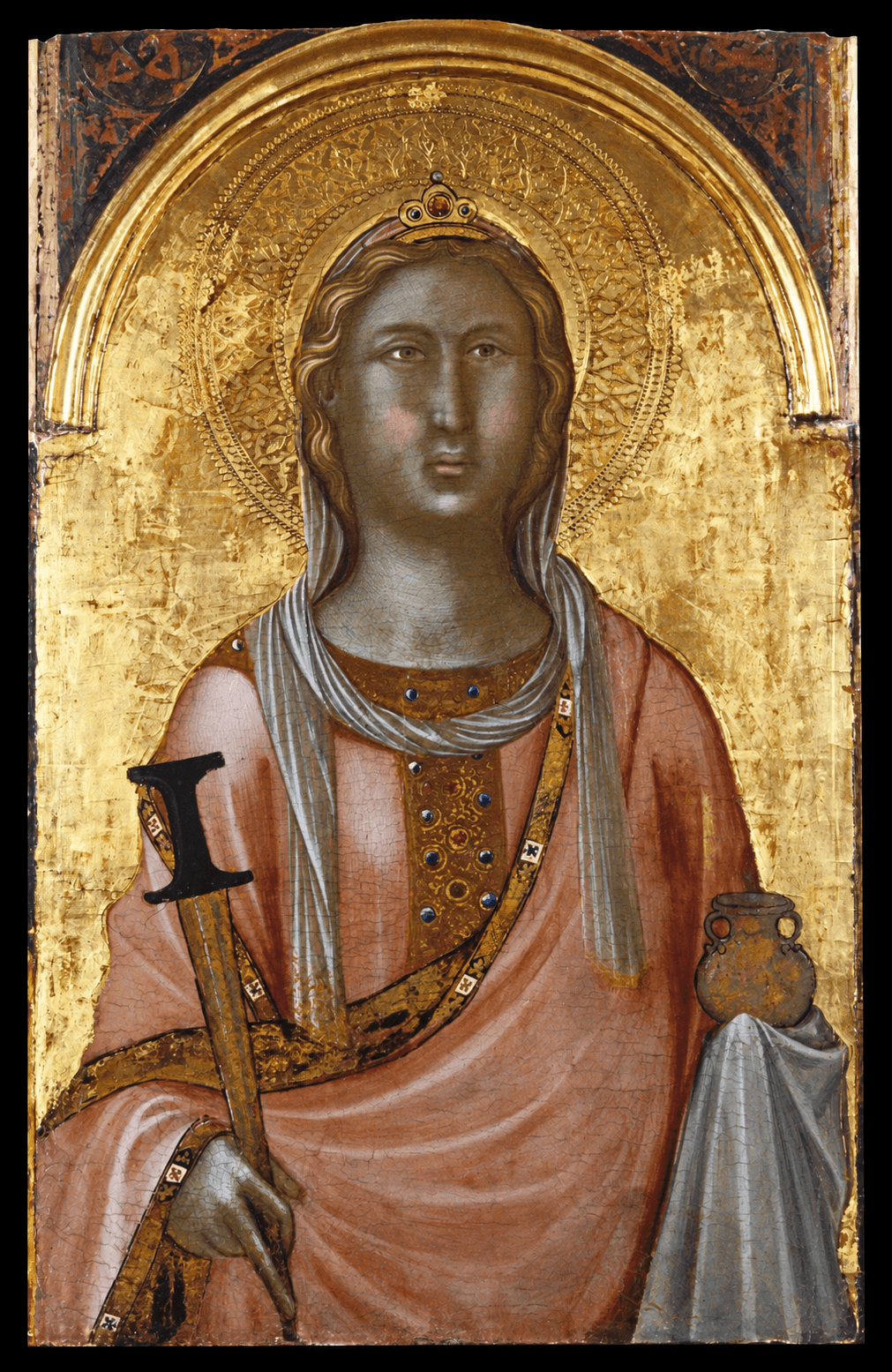
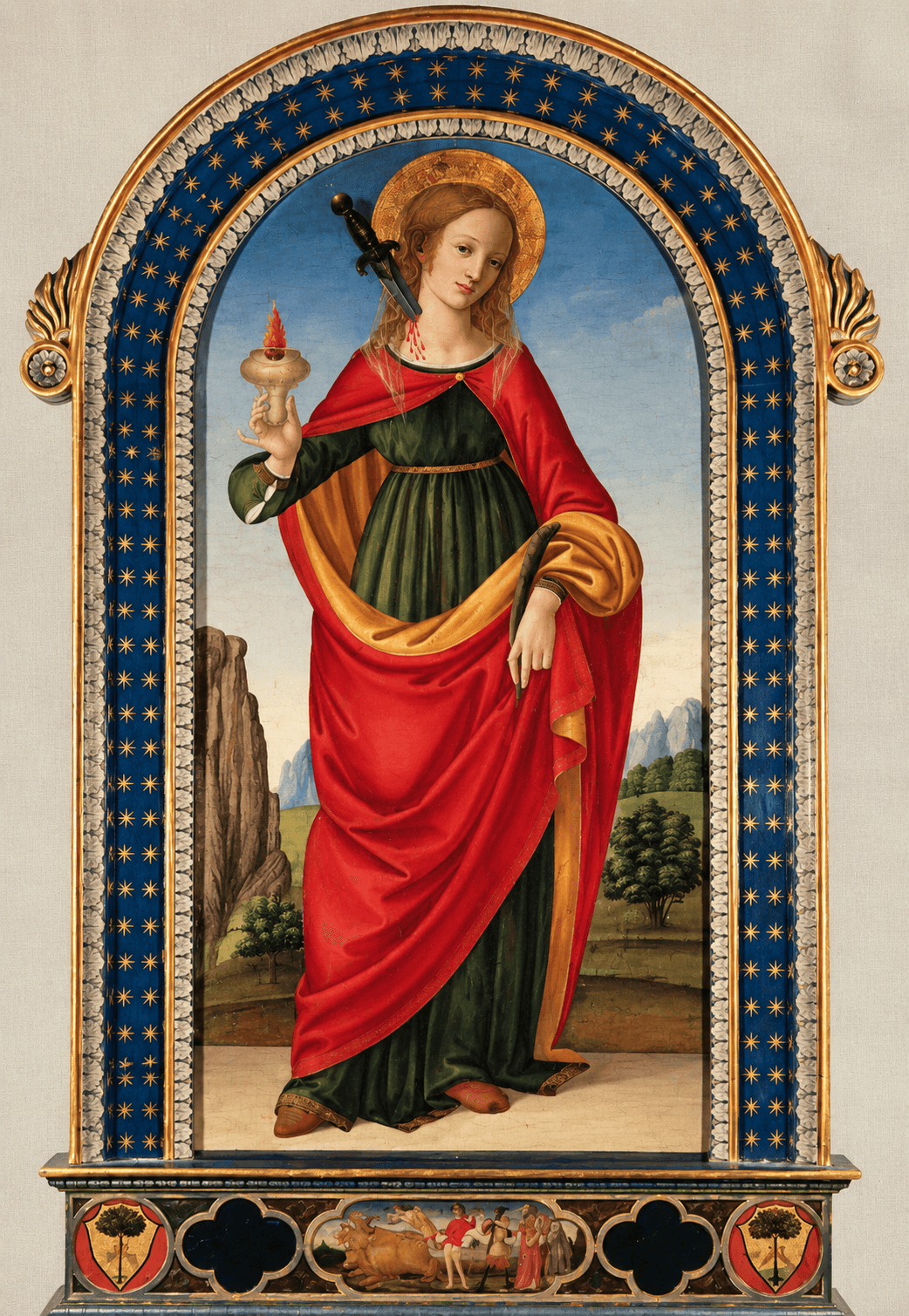
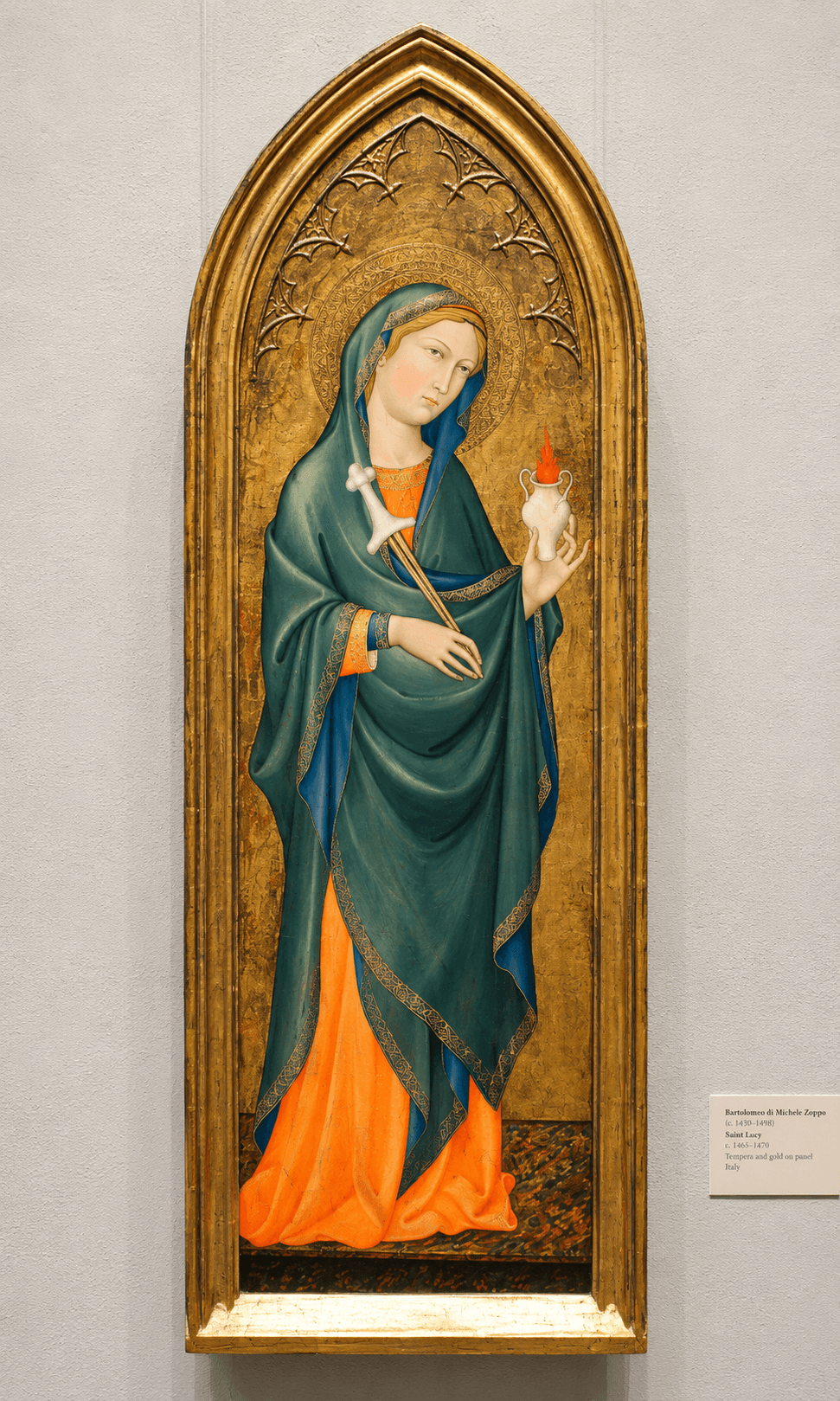
And Petrick noticed the same thing.
She identifies repeated artistic pairings of Magdalene and Lucy: the altarpiece by Niccolò di Segna in 1337; Michele di Matteo's Sant'Elena Altarpiece of 1427; and Sebastiano del Piombo's San Giovanni Crisostomo Altarpiece of 1511.
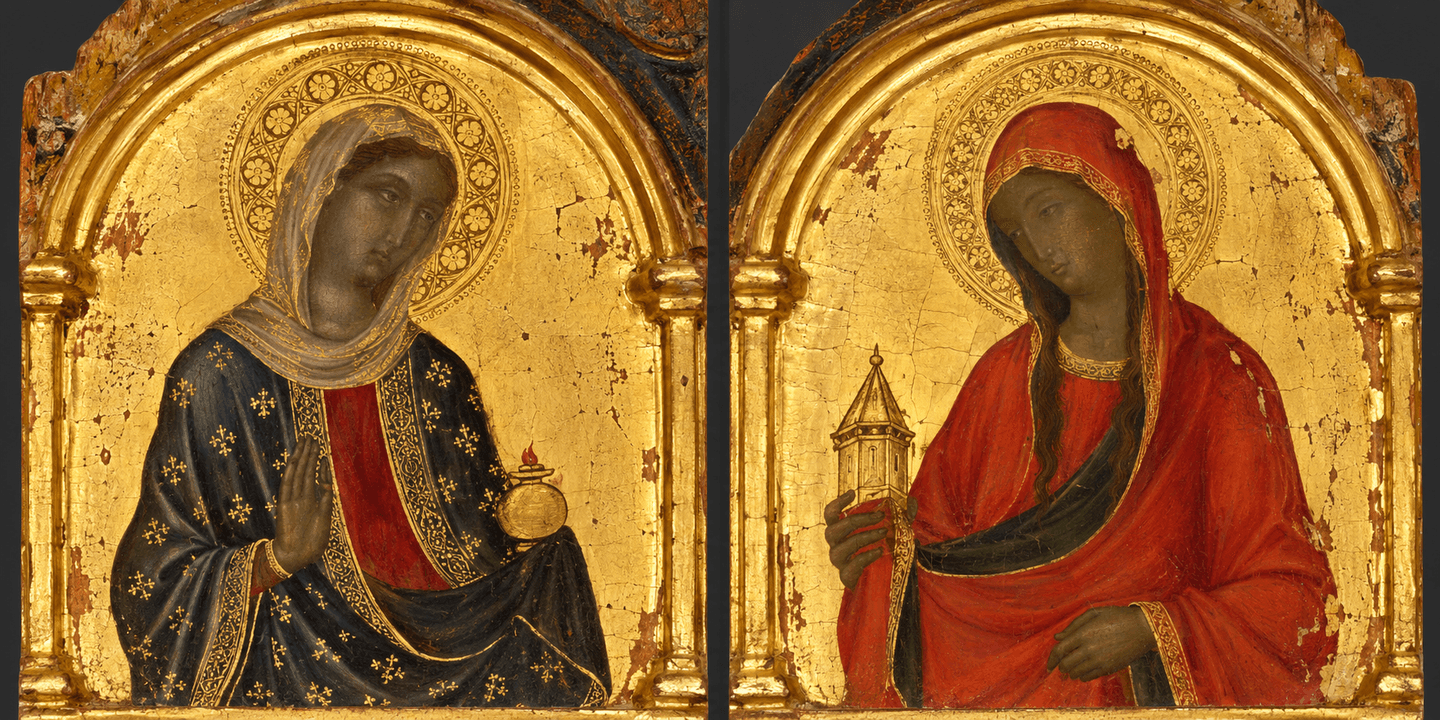
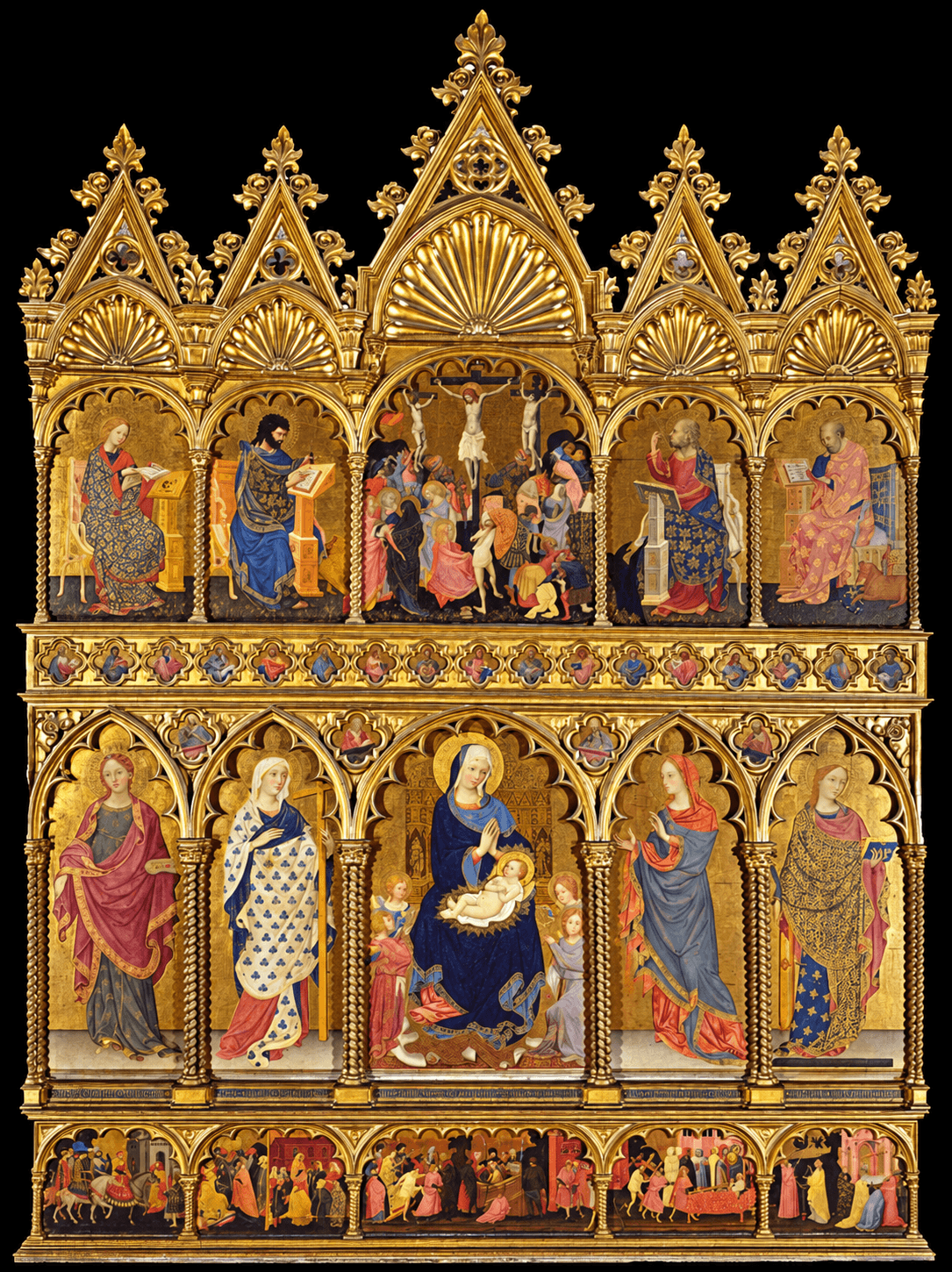
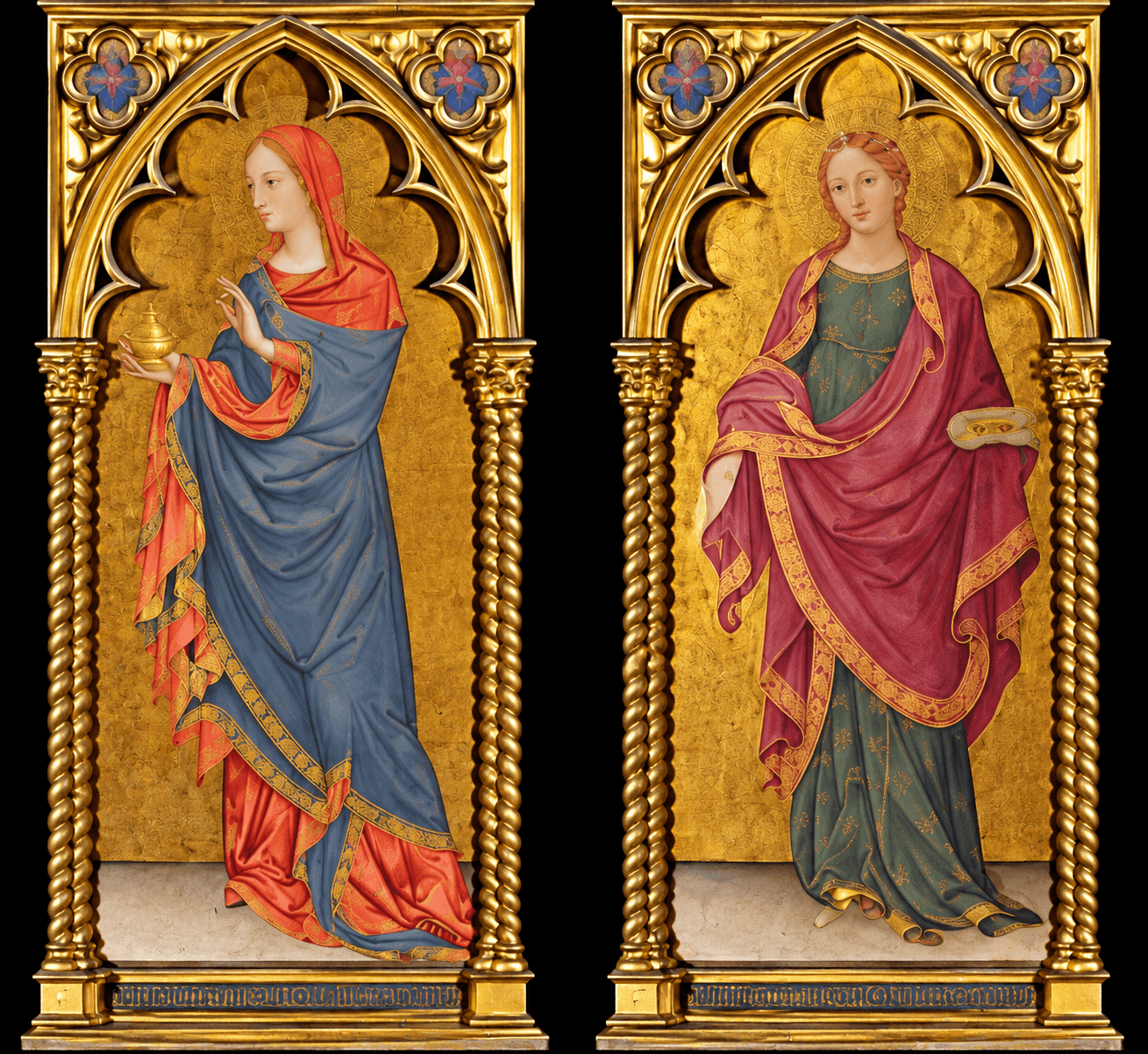
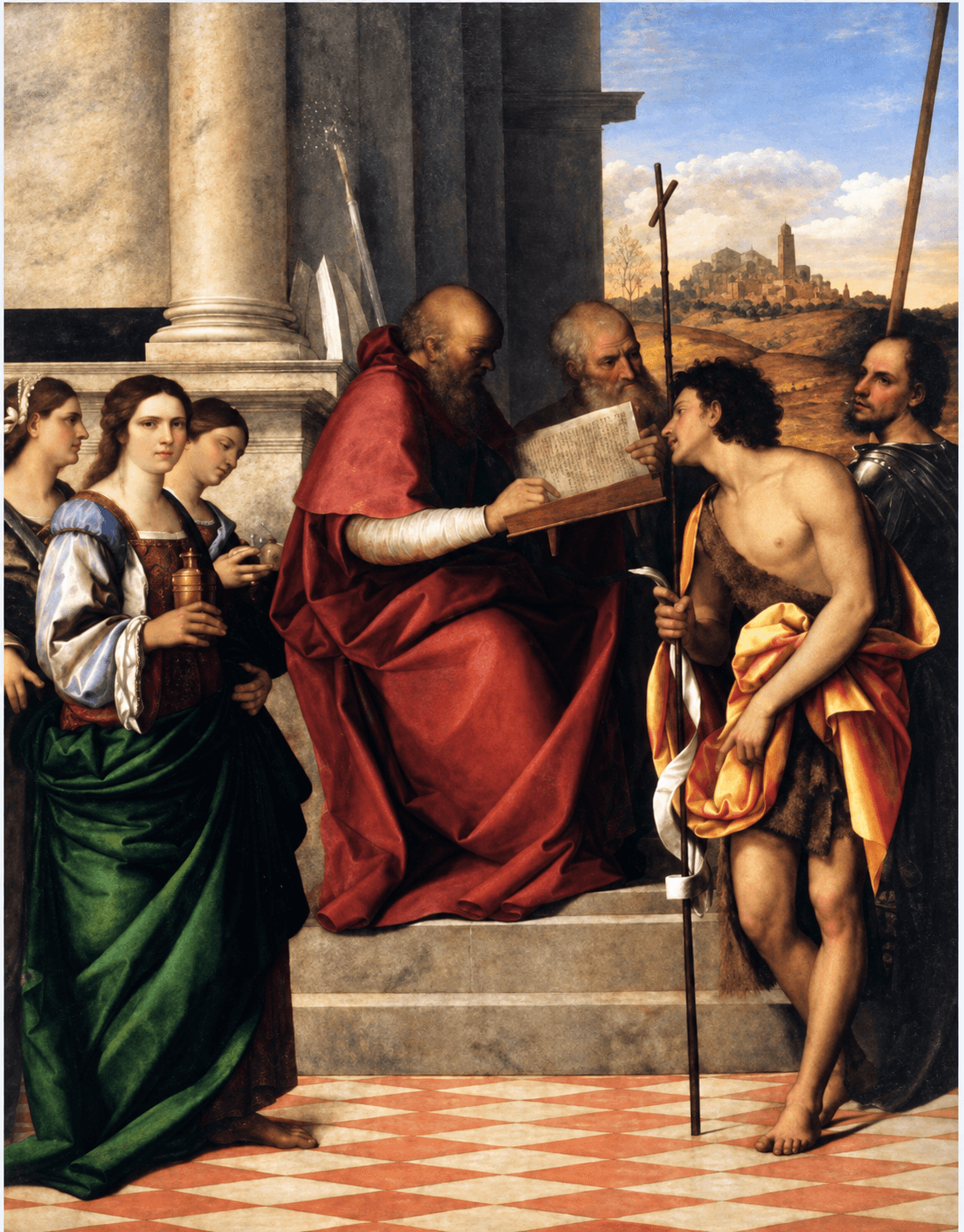
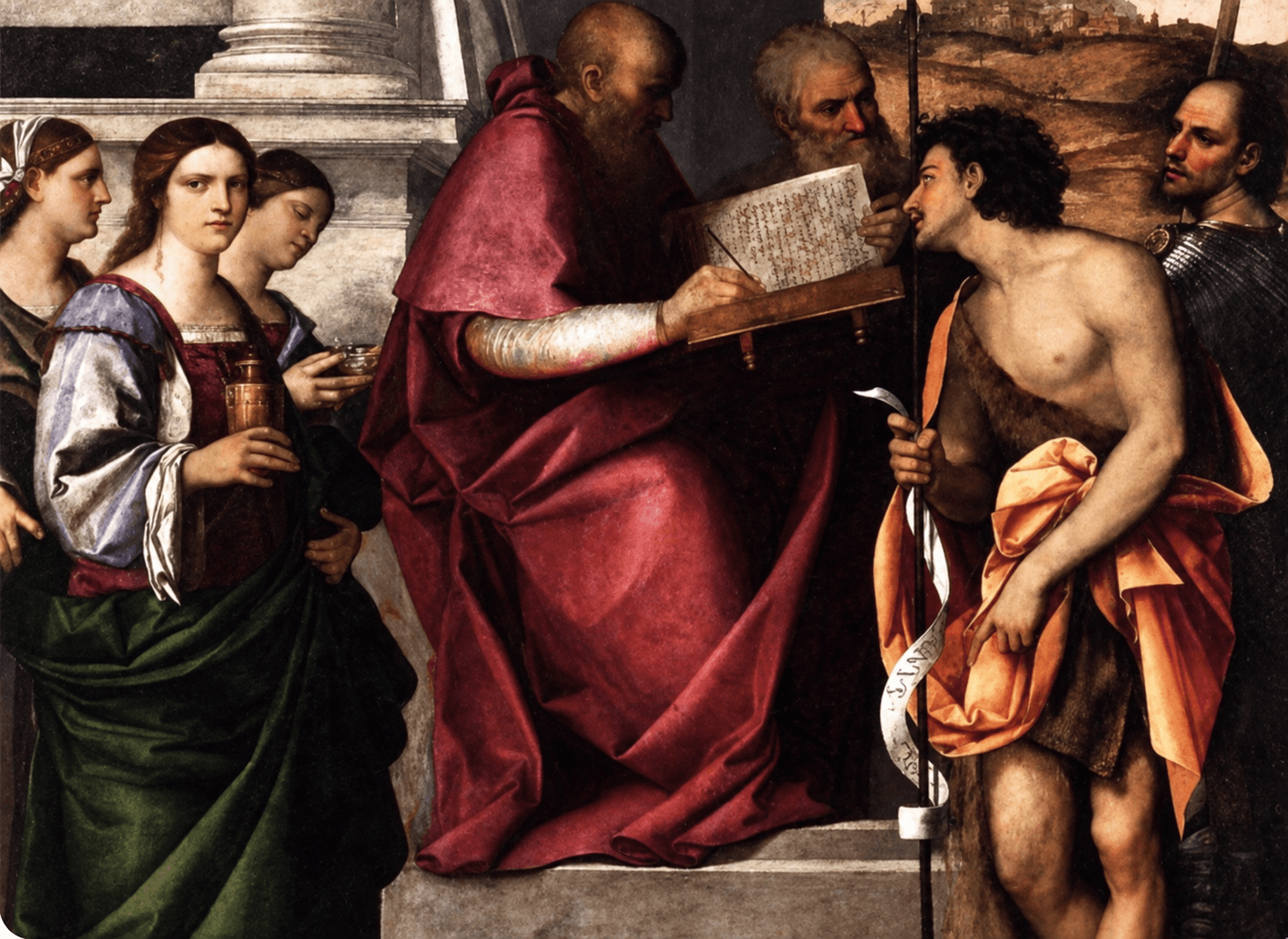
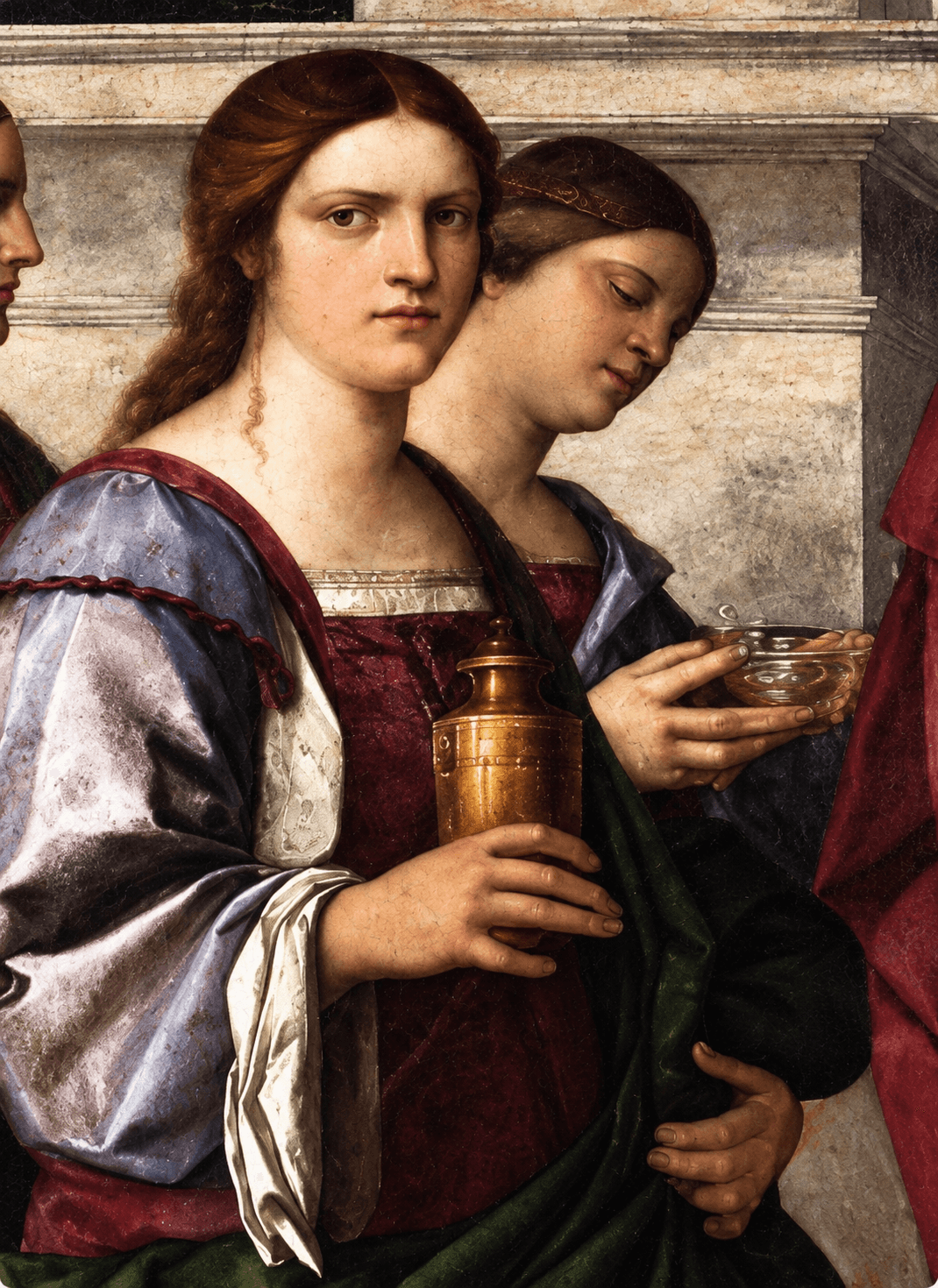
Why put these two women together?
One carries the perfume.
The other embodies light and sight.
Yet both are associated with precious vessels of light.
Petrick finds that Lucy's virginity itself could be described through the imagery of precious balm contained within a breakable vessel. Her liturgical tradition could describe her as a habitaculum—an abode or receptacle for God.
Now the parallel becomes fascinating.
MARY MAGDALENE
Vessel +Perfume+ Anointing+ Resurrection +Vision+ Illumination
SAINT LUCY
Vessel +Oil +Light+ Vision +Purity+ Illumination
Two women.
Two vessels.
Two paths toward light.
GOLD AND GLASS
Then, in Venice, something extraordinary happens.
In Sebastiano del Piombo's 1511 altarpiece, Magdalene and Lucy appear together.
Magdalene holds a vessel of gold.
Lucy holds one of glass.
Why gold and glass?
Petrick connects the imagery with medieval theological discussions of the resurrected or glorified body. Since ancient Sumerian times, gold suggested incorruptibility, brilliance, and purified matter. Transparent glass offered another possibility: matter through which light could pass.
The symbolism becomes spectacularly alchemical.
Ordinary matter (clay, dust) is transformed.
Opaque matter becomes translucent.
What was corruptible becomes incorruptible.
What blocked light becomes capable of transmitting it.
Petrick explicitly relates the transparent vessel to medieval discussions of the subtle or glorified body.
That is where this investigation moves beyond art history.
Because the vessel is already an image of the human body.
So what happens when the vessel becomes transparent?
The body becomes capable of bearing light.
MARIAMNE AND THE GLASS ARK
And here the trail reaches back beyond the medieval paintings.
To the Acts of Philip.
This apocryphal work, generally dated to the fourth century, preserves a remarkable scene involving Mariamne, Philip’s sister and apostolic companion.
François Bovon proposed identifying this literary figure with Mary Magdalene. That identification is an interpretation, not an explicit statement in the passage, which calls her Mariamne.
In 1974, Bovon and Bertrand Bouvier discovered a much fuller manuscript of the Acts of Philip at the monastery of Xenophontos on Mount Athos. The manuscript is medieval; the narrative it preserves is much older. The discovery expanded our knowledge of an already known work.
What matters for this investigation is the image itself.
At Hierapolis, in a confrontation with the worshippers of a serpent, Philip, Bartholomew and Mariamne are seized and subjected to violence. When Mariamne is stripped, the appearance of her body changes.
It becomes, in an older English translation:
“a glass chest filled with light.”
Her persecutors cannot approach her.
The fuller imagery discussed by Alexander Golitzin includes a cloud of fire. He reads the episode through biblical traditions of the divine glory inhabiting the Ark of the Covenant and the sanctuary, and through the Transfiguration. The Greek word kibōtos can mean a chest or an ark. Here the human body becomes the place where divine presence is revealed.
Pause over that.
She does not hold the glass vessel.
Her body takes on its appearance.
The woman becomes the luminous container. The Ark or Vessel of light.
This is a striking early Christian counterpart to the question raised by Magdalene’s later jar: what if the vessel signifies the woman herself?
In the paintings, we encounter gold and transparent glass in the saints’ hands.
In the Acts of Philip, the image moves into the body.
A living ark.
A vessel filled with light.
The episode later describes Mariamne returning to her former appearance. It is a protective manifestation within the story, not a description of a permanently transformed resurrected body.
But its symbolic force remains extraordinary.
The body can reveal the light it contains.
If we follow Bovon’s identification, this becomes an especially suggestive Magdalene connection. Especially as Magdalene is the master of the Etimasia Throne of Christ, one of component of which is the jar of anointing oil. Even without accepting that identification, Mariamne offers an early Christian example of a female apostolic figure represented as a luminous vessel.
While this does not establish that Jacobus or the painters knew the Acts of Philip a line of transmission is evident. One that gives us a powerful thematic parallel.
The glass ark makes visible the same possibility that draws me to Magdalene’s vessel:
the sacred container can be the human being.
THE ALCHEMY OF THE BODY
Consider glass itself.
Sand is ordinary.
Opaque.
Earthly.
Mostly silica dioxide or quartz.
But expose its ingredients to extraordinary heat and they transform.
The result is something altogether different:
transparent matter.
Petrick observes this very symbolism in Venetian Magdalene imagery: glass is created through fiery transformation of common materials into something precious, making it particularly suitable for a saint whose identity centered upon conversion and transformation.
The spiritual metaphor is beautiful.
The fire does not destroy the vessel.
It transforms it.
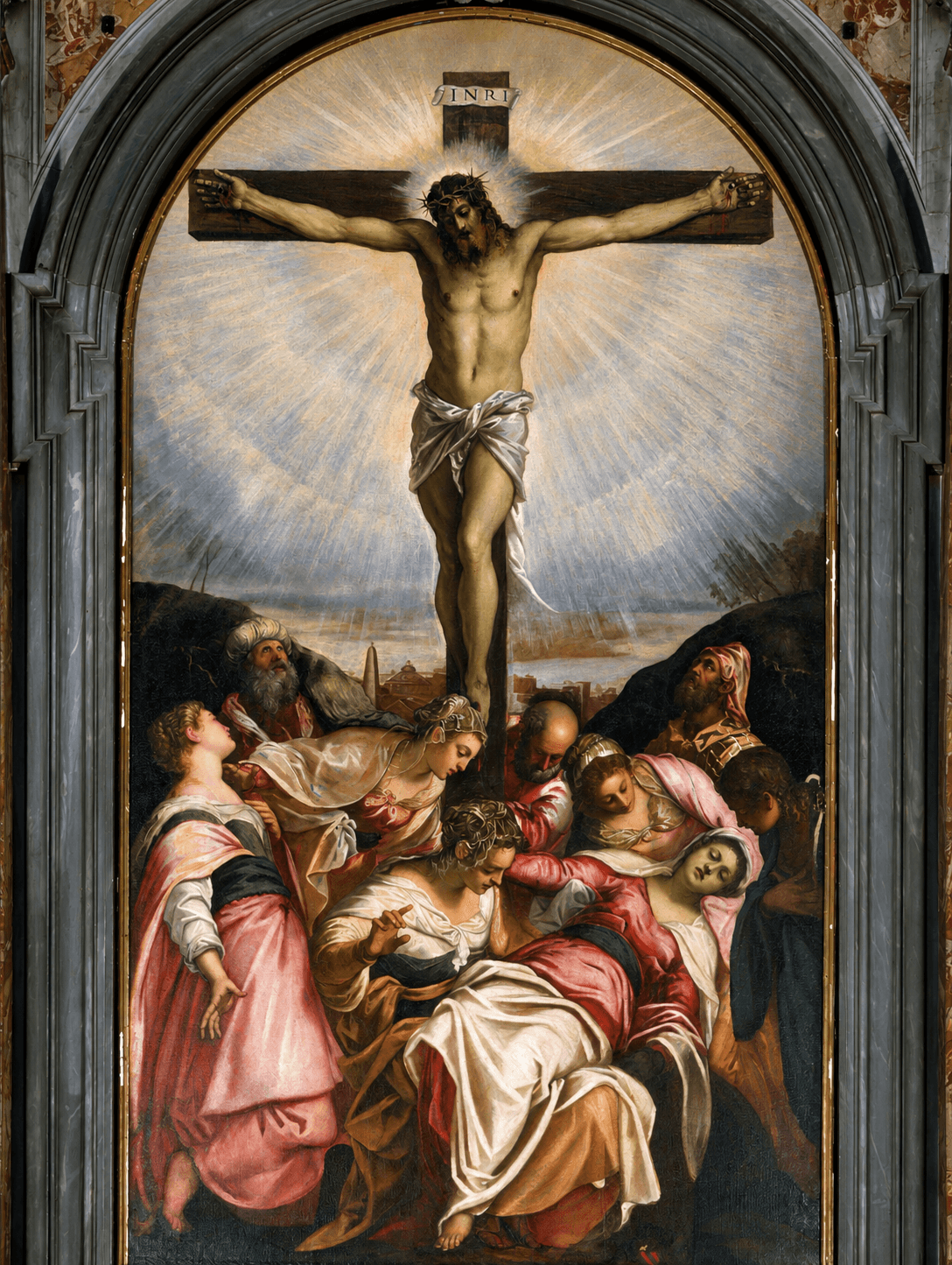
The vessel becomes capable of transmitting light.
This is remarkably close to the language I have used for years when discussing the Robe of Light and the transformed human.
The goal is not escape from the body.
The body itself becomes transformed.
Matter becomes capable of bearing more spirit.
The vessel becomes capable of bearing more light.
ALABASTER
Now return to Magdalene's original vessel.
Alabaster. Egyptian crystal.
Even this material participates in the mystery.
Petrick notes that medieval writers valued alabaster for its ability to preserve ointments from corruption. That property naturally suggested the incorruptibility of glorified flesh.
But alabaster has another extraordinary quality.
Hold thin alabaster before light and it glows.
It is stone—but stone capable of illumination.
Think about that.
The Magdalene carries a stone (alabaster) vessel containing fragrance.
The stone itself can transmit light.
And according to Provençal tradition, Magdalene was ultimately placed within an alabaster tomb.
The woman carries the alabaster vessel.
The woman becomes the vessel.
The woman enters the alabaster vessel.
The tomb opens.
Fragrance emerges.
And medieval art increasingly surrounds Magdalene with the language of radiance.
Fragrance and light are beginning to converge.
FROM MUD TO LIGHT
One of the medieval formulations uncovered by Petrick describes the transformation with astonishing economy: mud (clay) becomes light and a vessel of glory. Mud to light to vessel of glory.
That could almost define ascension. Mary Magdalene style.
Earth.
Purification.
Illumination.
Radiance.
Glory.
And there is an even more extraordinary parallel.
Margaret of Cortona—herself regarded as a kind of second Magdalene—was described as a vessel of sanctity overflowing with two things:
light and perfume.
There they are.
The two streams of our investigation.
LIGHT + FRAGRANCE.
The vessel contains both.
THE TWO PATHS OF THE MAGDALENE
We can now see two symbolic streams developing around Mary Magdalene.
The first is the path I followed in Mary Magdalene and the Secret of the Rose:
Vessel. Nard/Myron. Anointing. Fragrance. Fragrant body. Rose.
But there is a second path:
Vessel. Body. Purification. Gold/Alabaster/Glass. Clarity. Light. Glorified body. Illuminata. Illuminatrix.
And eventually the two paths intersect.
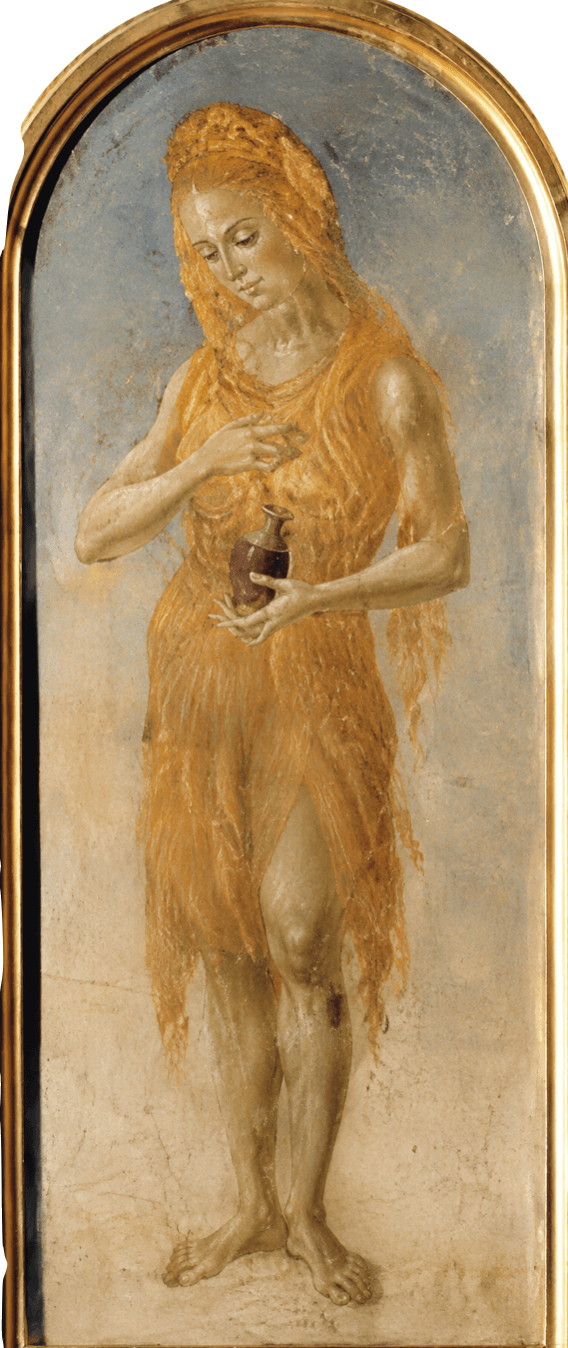
FRAGRANCE + LIGHT = ILLUMINATE
This may be the deeper mystery of the Magdalene vessel. It represents not merely something she possesses. It represents what she becomes.
THE FRAGRANT BODY AND THE BODY OF LIGHT
This gives new meaning to the wondrous Provençal stories of Mary Magdalene's final years at Sainte-Baume.
According to medieval legend, Magdalene withdraws into the wilderness.
She lives in a cave. Seven times each day angels raise her into the heavens. She receives celestial nourishment, the psychoactive starfood of the angels. And after years of these encounters her appearance is transformed. Her face becomes radiant.
The Magdalene who entered the wilderness is not the Magdalene who emerges.
She has become something luminous.
If one treats this as hagiography (an exaggerated story about a saint), not biography, then this is just a story.
If one treats this as biography, then this story is an invitation to follow her.
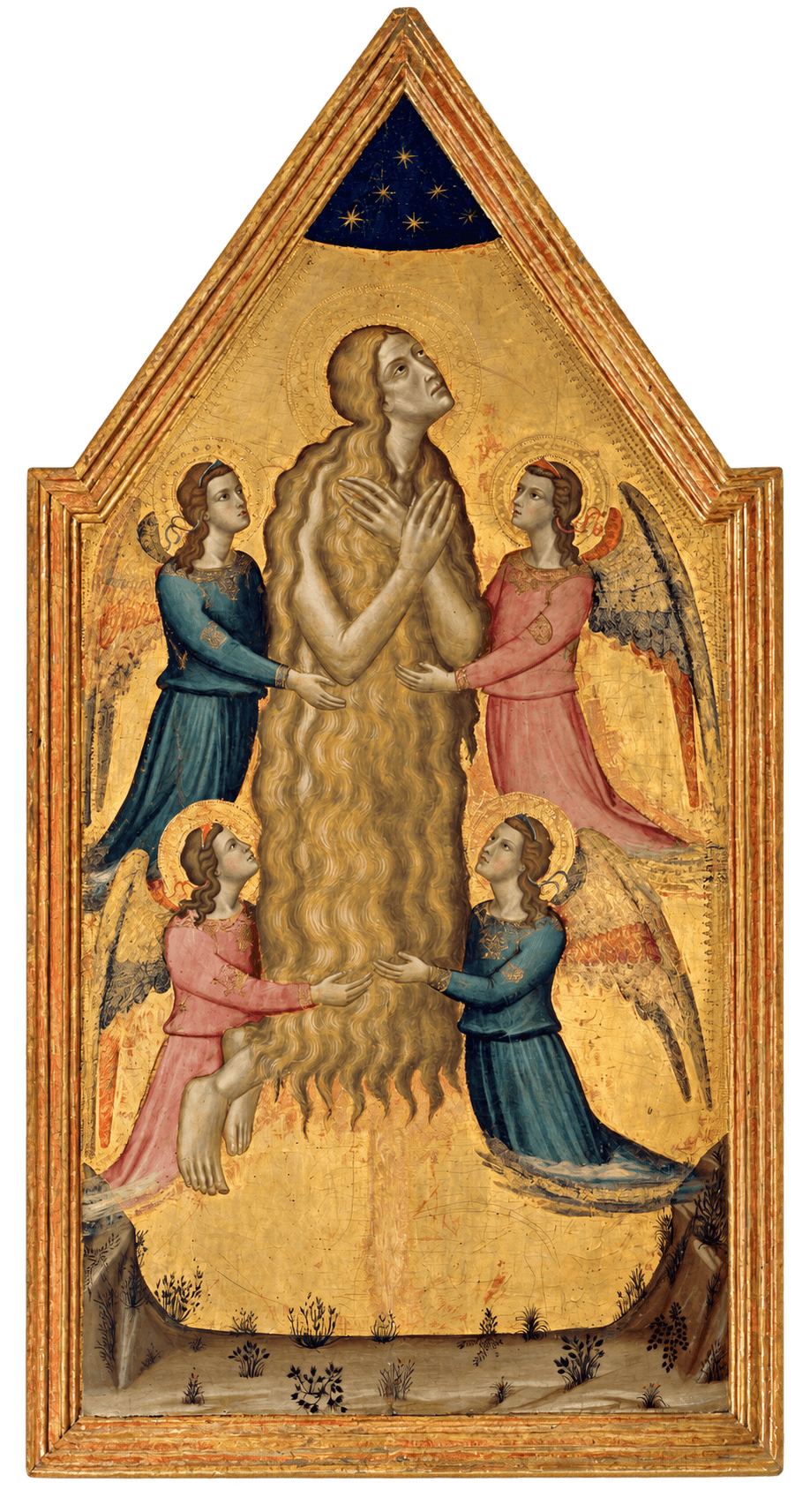
Symbolically its message is unmistakable:
contact with heaven transforms the human vessel.
The same principle appears in the Transfiguration of Christ.
His face shines like the sun
His garments become white as light (the Robe of the Soul).
The resurrected righteous shine like the sun.
The earthly vessel becomes capable of displaying heavenly light.
That is the ancient Christian dream of the glorified body.
And Mary Magdalene increasingly becomes one of its great feminine exemplars. The female counterpart of Christ.
THE ROSE OF LIGHT
Now we can return to the Rose.
In the previous investigation we discovered something I had been searching for for years.
In the previous investigation we discovered something I had been searching for for years.
A medieval Provençal liturgy actually calls Mary Magdalene:
ROSA RUBENS ET NOVELLA
The Red and Newly Blossoming Rose.
And says:
Like a rose, Magdalene's body perfumes the world.
We should not rewrite that medieval text and pretend that “Rose” secretly meant “light body.”
It doesn't say that explicitly
But we can now recognize something more subtle.
The medieval Magdalene existed simultaneously within two powerful symbolic systems.
In one she is the woman whose body becomes fragrant.
In the other she is the woman who receives and gives light.
ROSA RUBENS.
ILLUMINATRIX.
The Red Rose.
The Illuminator.
One image describes what emanates from her as fragrance.
The other describes what emanates from her as light.
The other describes what emanates from her as light. And both begin with the same symbol.
The Vessel.
WHAT WAS REALLY IN THE JAR?
Perhaps we have been asking the wrong question.
For centuries people have asked:
What was in Mary Magdalene's alabaster jar?
Nard? Myrrh? Perfume? Sacred oil? Placebo? A psychoactive sacrament? A resurrection substance?
Those remain fascinating questions or possibilities. .
But medieval artists and mystics appear to have asked another one:
What does the jar represent?
And their answer is startling.
Mary. Her body. Her heart. Her soul. Her capacity to receive. Her capacity to pour forth. Her capacity to transform.
That may be the real secret of the Magdalene vessel.
The ultimate sacred container is not made of alabaster.
The chest with the Ark of Glass is within my chest. Within my heart.
BECOMING THE VESSEL
This is where Mary Magdalene's story becomes more than history.
The vessel begins empty. It receives something precious. It protects it. It carries it. It is opened. It pours forth what it contains.
And finally, the distinction between vessel and substance disappears.
Mary carries the fragrance. Mary witnesses the Resurrection. Mary becomes fragrant. Mary receives the light. Mary becomes luminous. Mary receives the teaching. Mary becomes the messenger. Mary becomes the Apostle to the Apostles.
The receiver becomes the transmitter.
Mary Rises. She Shines.
That is Illuminatrix.
And perhaps that is why this ancient imagery still speaks so powerfully. The teaching is not simply:
Find the light.
It is:
Become capable of carrying it.
Not simply:
Seek the fragrance.
But:
Become the fragrance.
Not simply:
Find the Rose.
But:
THE SECRET OF THE VESSEL
This gives us a new way to read the Magdalene's transformation.
At first she carries an external substance. Then the substance becomes internal. The perfume is distilled in the heart. The body becomes the vessel. The vessel passes through the fire of transformation. The vessel becomes gold. The vessel becomes translucent. The vessel bears light.
And finally it pours its contents into the world.
The Magdalene mystery is therefore not ultimately about possessing a sacred substance.
It is about becoming a sacred substance.
And perhaps this is why Mary Magdalene continues to return to us.
She stands at the threshold between tomb and garden.
Between death and resurrection.
Between matter and light.
Between the sealed vessel and the opened vessel.
Between fragrance hidden within the jar and fragrance filling the world.
She is Rosa Rubens, the Red Rose.
She is Illuminata, the one who receives the light.
She is Illuminatrix, the one who gives the light.
And perhaps the deepest Magdalene teaching has been sitting in her hands all along.
You are the vessel.
What will you fill it with?
And when it is opened, what will pour forth?
About William Henry

William Henry is a Nashville-based author, investigative mythologist, and TV presenter. He is an internationally recognized authority on human spiritual potential, transformation and ascension.
He has a unique ability to incorporate historical, religious, spiritual, scientific, archaeological and other forms of such knowledge into factually-based theories and conclusions that provide the layperson with a more in-depth understanding of the profound shift we are actually experiencing in our lifetime.
Related Articles

From Dust to Spice
On Arrakis, spice hidden in the desert dust expands consciousness and enables humanity to travel between worlds. But Dune also warns that extraordinary powers, extended life and technological enhancement are not the same as spiritual transformation.

From Dust to Light
Humanity was formed from earthly dust and animated by divine breath. As carbon bodies become increasingly integrated with silicon intelligence, can technology help awaken our latent capacity for transformation—or will it merely create a convincing simulation of the human light body?
The Third Path
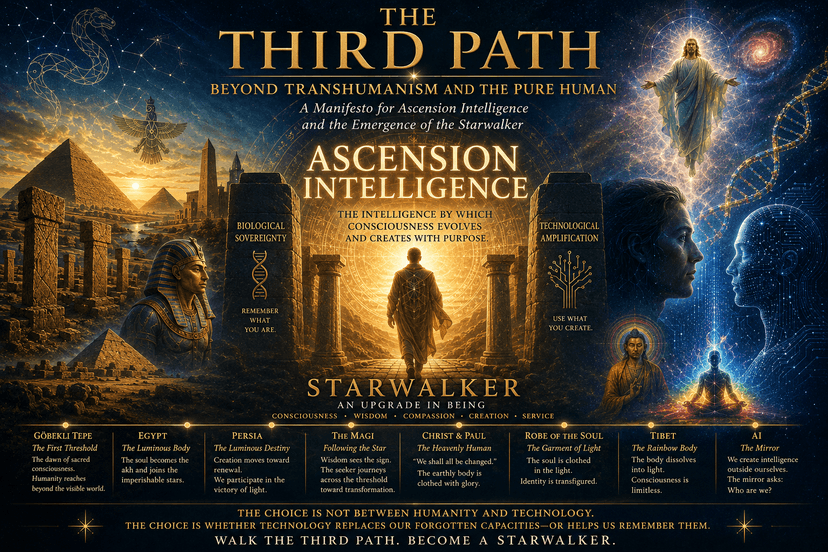
Humanity is being offered a false choice: remain biologically “pure” or merge with our machines. There is a Third Path—one that uses technology without surrendering to it, awakens the latent capacities of the human being, and points toward an ancient possibility: the emergence of the Starwalker.