The Garment of the Gods
The Mysterious Sardis Statue, the Melammu and the Lost Tradition of the Luminous Human
A newly discovered statue from Sardis, Turkey opens an extraordinary question about one of humanity’s oldest ideas: that divine beings—and transformed humans—could be clothed in a visible field of glory.
By William Henry
A remarkable archaeological discovery at Sardis has brought me back to a question I have pursued for decades:
What did the ancients mean when they portrayed gods, initiates and transformed human beings as wearing supernatural garments?
Were they symbols of rank?
Or were some of these garments artistic attempts to represent something much more profound—a radiant state of being that the Mesopotamians called melammu and that I identify within the Starwalker tradition as the Garment of Light?
A newly discovered monumental statue from ancient Sardis makes this question especially timely.
The statue belongs to the extraordinary cultural world of Lydia and Persian-period Anatolia, a crossroads where Greek, Anatolian and Near Eastern traditions encountered one another.
What immediately captured my attention was the figure's clothing.
Its garments are covered with extraordinary linear patterns. In photographs, portions appear almost to ripple across the body. And this is not an isolated phenomenon at Sardis.
The official Sardis archaeological catalogue describes an earlier statue known as the “Mantle Wearer,” dated around 530–520 BCE, as wearing a chiton rendered in “fine, small wavy lines.” Archaeologists emphasize the contrast between this exceptionally delicate, rippling inner garment and the heavier cloak placed over it.
Other Sardian sculptures continue the convention. A later female statue has a chiton represented by “numerous wavy lines chiseled into the surface,” while another archaistic torso again employs vertical wavy folds.
So we are dealing with a genuine Sardian artistic vocabulary.
And I believe it deserves a new question.
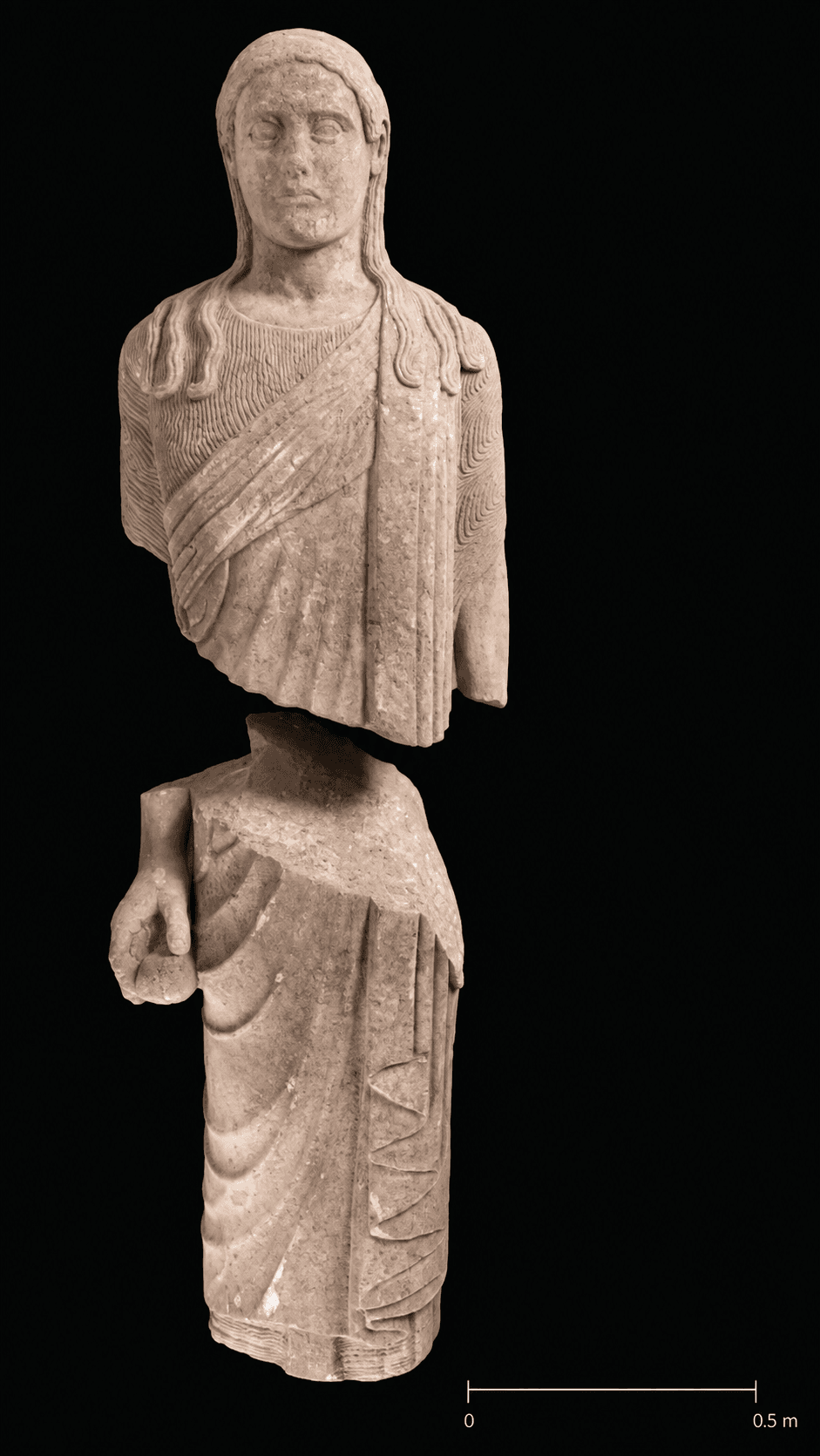
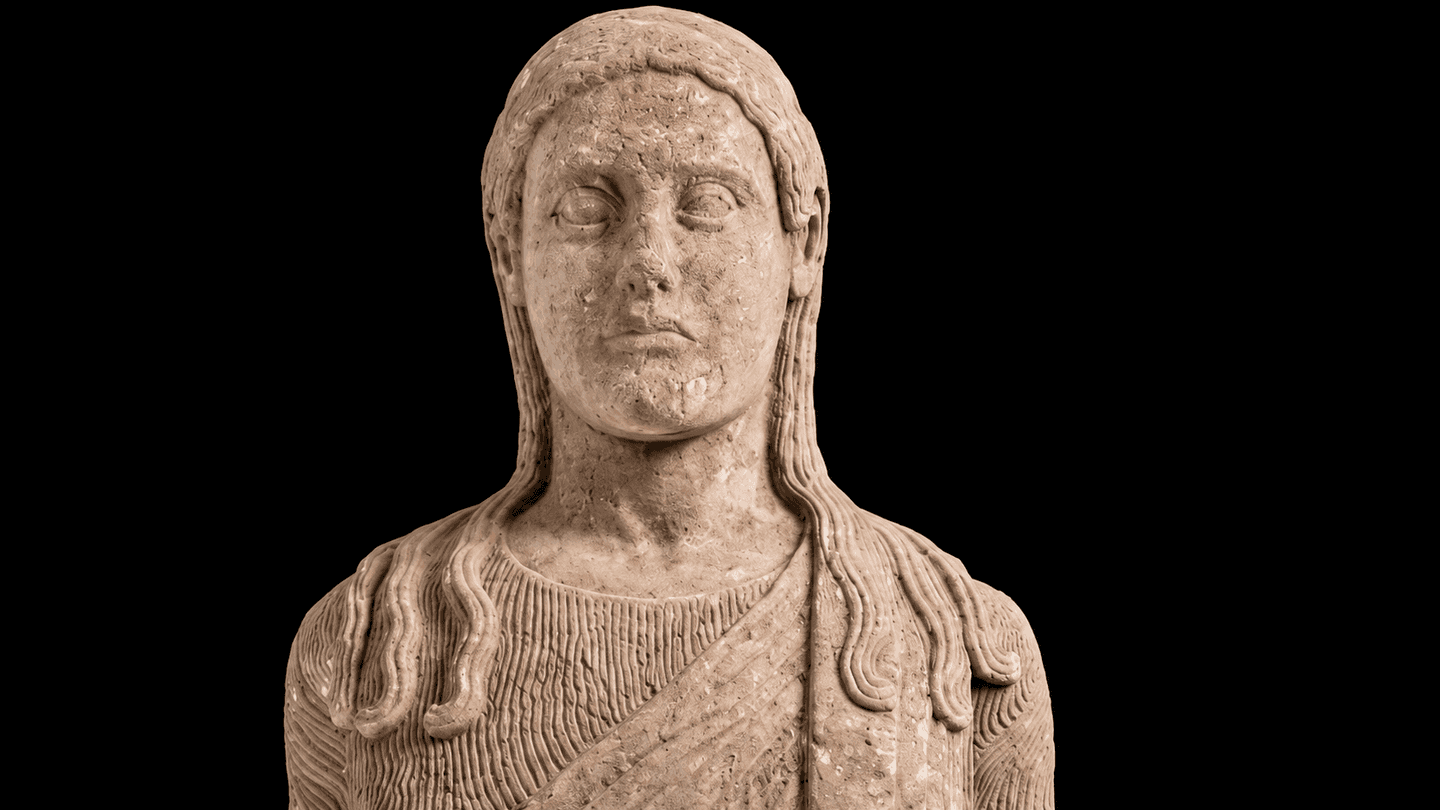
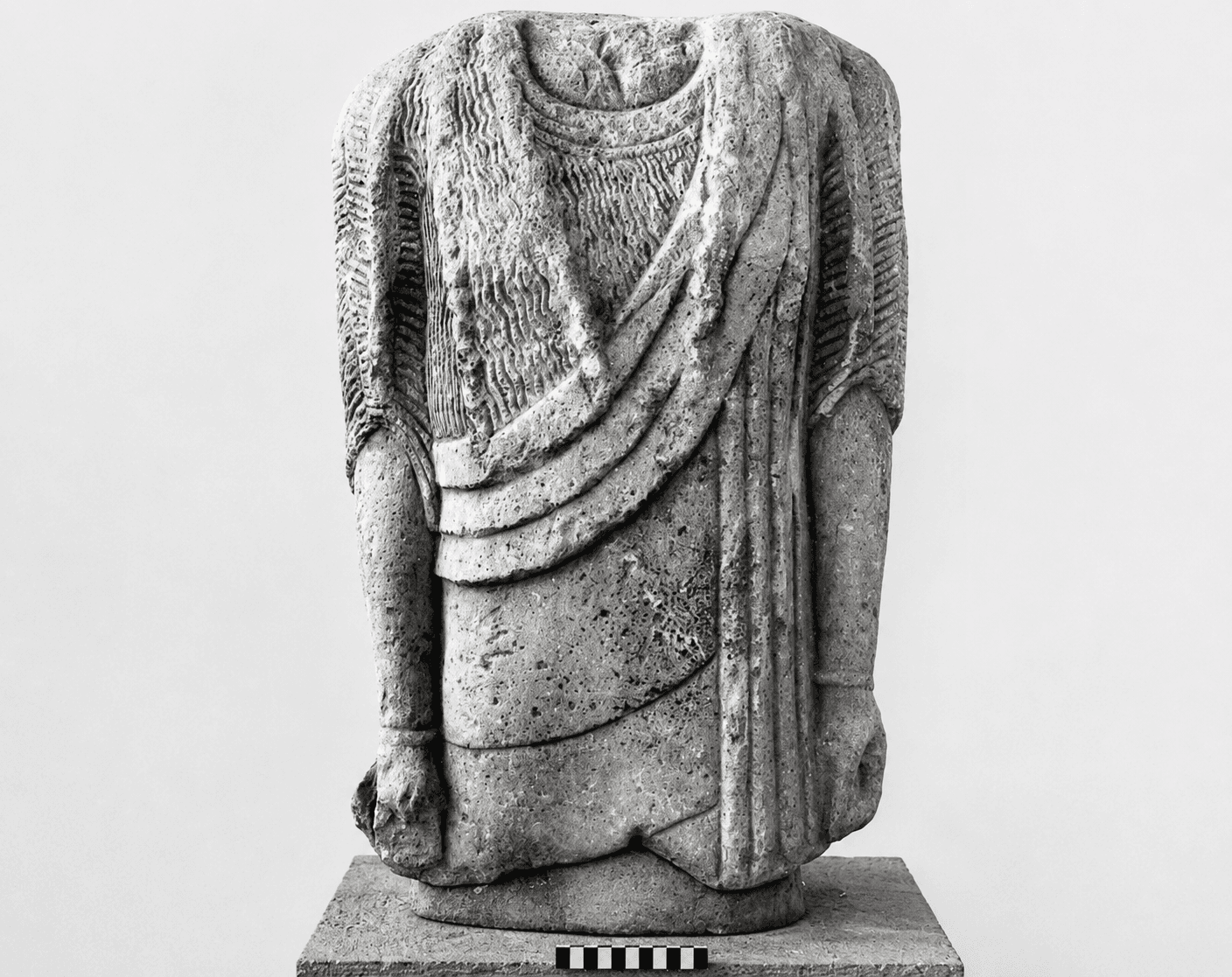
What if the lines are telling us something about the wearer?
The conservative archaeological explanation is straightforward.
The sculptor is depicting textile.
The fine lines distinguish a thin chiton from the heavier outer garment. They may reproduce pleating, weaving, patterned fabric or the visual behavior of very fine cloth.
That explanation should be our starting point.
But it does not necessarily have to be our ending point.
Because clothing in the ancient world was never merely clothing.
Garments communicated identity, office, wealth, ethnicity, ritual status and proximity to the divine.
And once we widen the lens from Sardis to the ancient Near East, we encounter a concept that makes these strange rippling garments much more intriguing.
That concept is melammu.
The Lost Meaning of Melammu
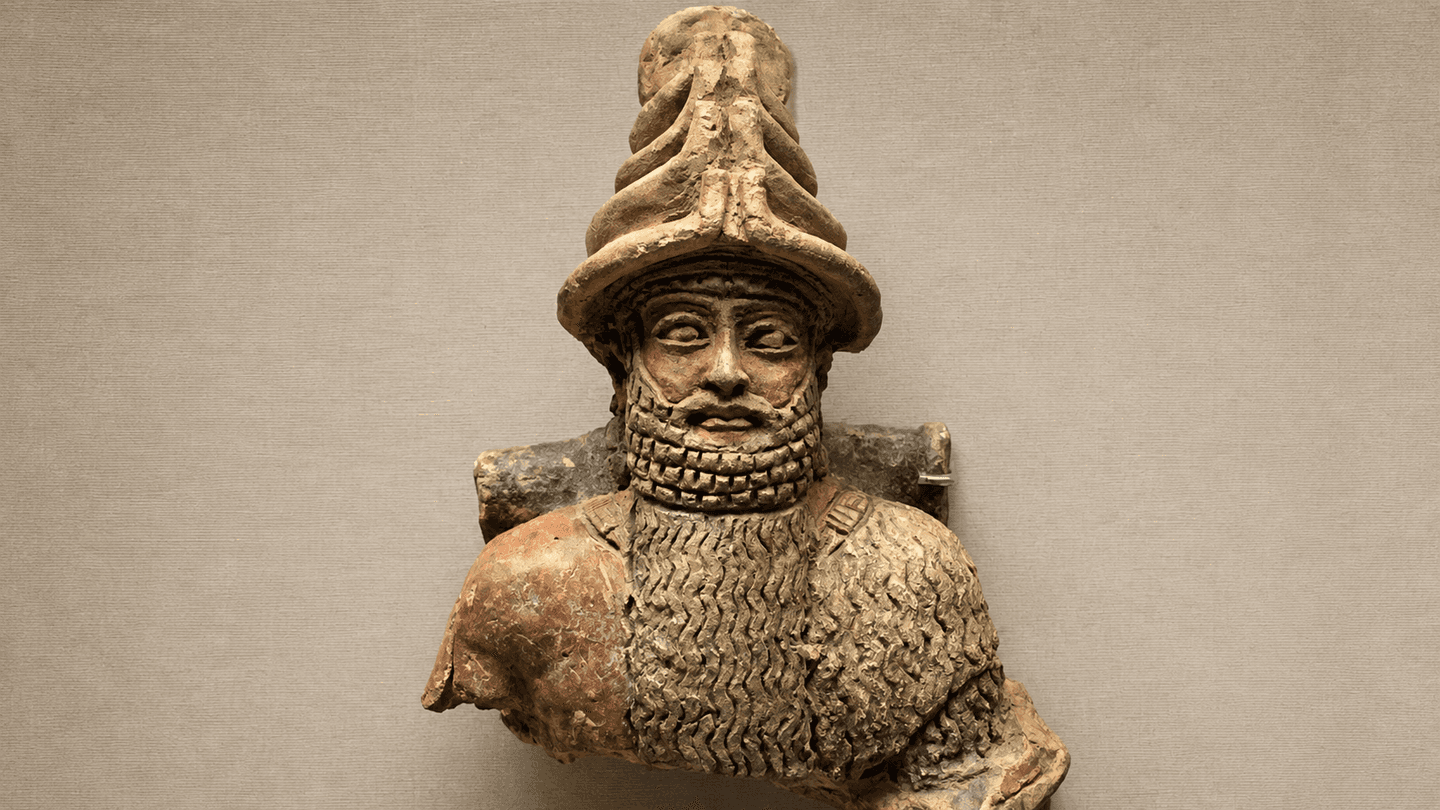
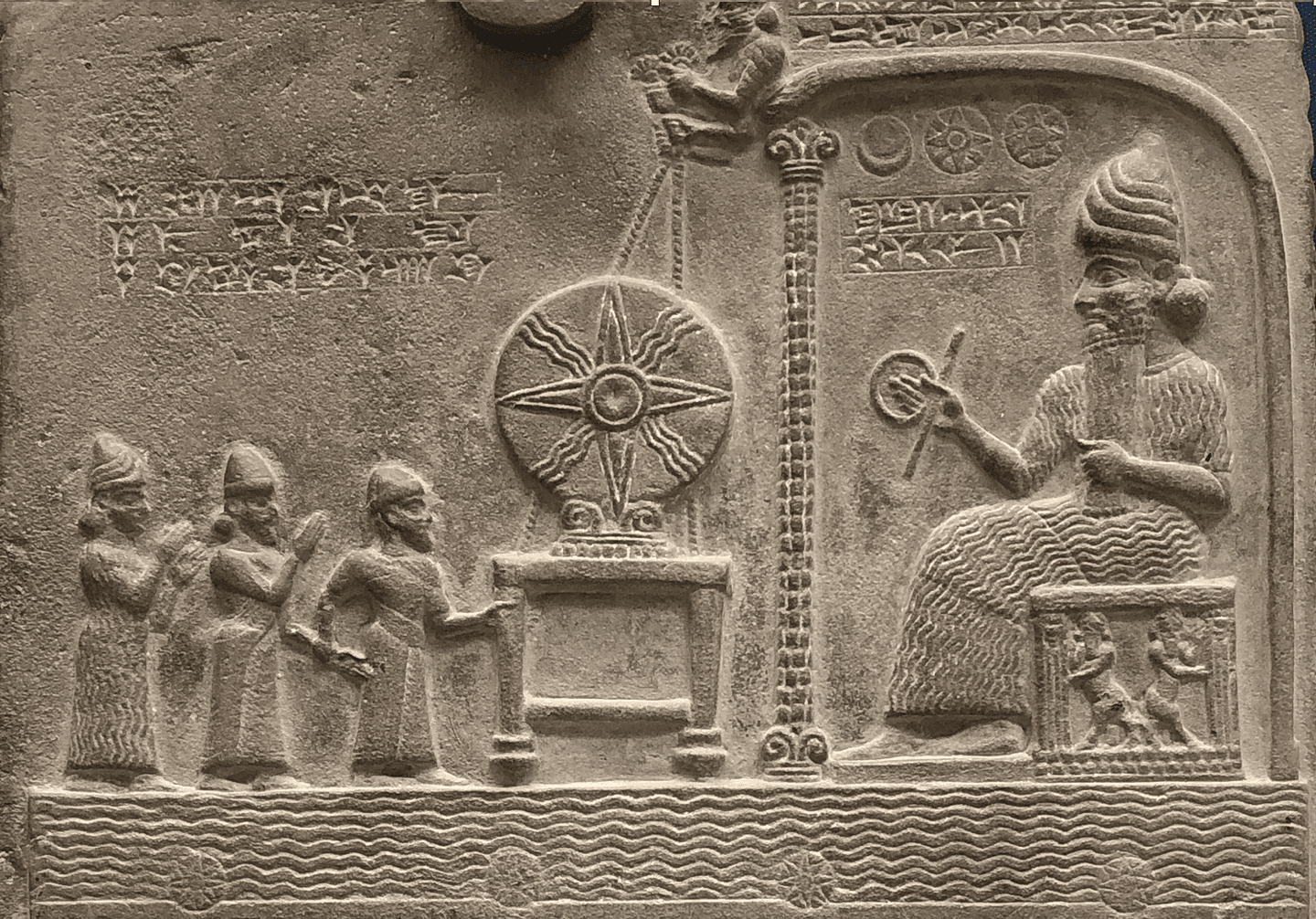
The Akkadian word melammu, derived from the earlier Sumerian ME-LAM, is commonly translated as radiance, splendor, awe-inspiring sheen or terrifying brilliance. Assyriologist Beate Pongratz-Leisten notes that ancient dictionaries and scholarship connect melammu specifically with terms expressing luminosity and splendor.
But melammu was more than ordinary brightness. It was the overwhelming manifestation of divine presence.
Gods possessed it.
Kings could receive it.
Divine objects could manifest it.
It could inspire reverence and terror.
Most importantly for our discussion, Mesopotamian texts could conceptualize divine qualities as things that were put on, worn, carried or radiated.
This is where the Sardis statue becomes provocative.
Because perhaps we should not automatically separate two ancient ideas that modern scholarship tends to put into different boxes:
the sacred garment and the divine radiance of its wearer.
From the Starwalker perspective, these may sometimes represent two aspects of the same idea.
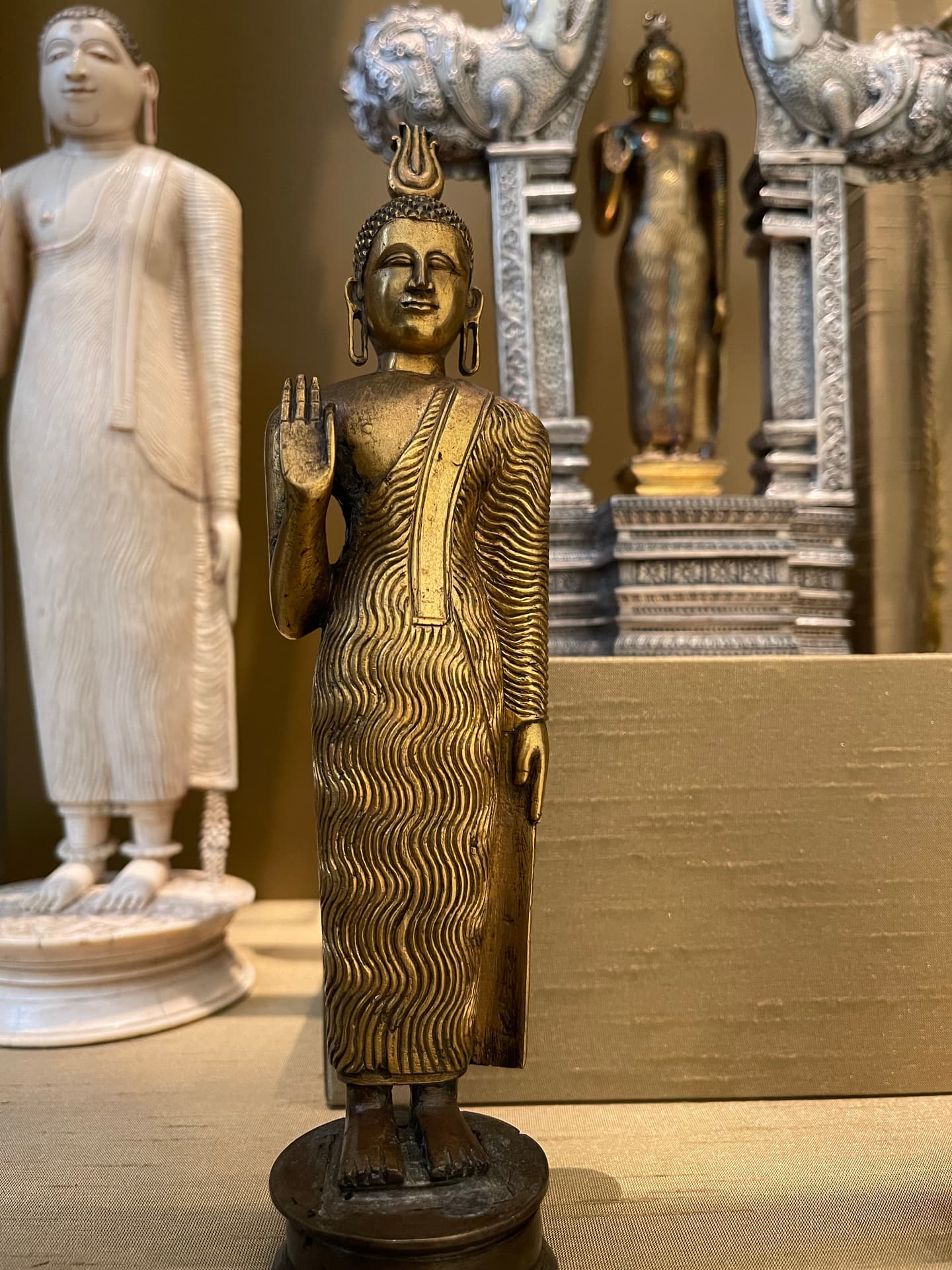
The Garment Was More Than Clothing
This is a theme I have followed across civilizations.
Again and again, the transformed being is associated with a special covering.
A luminous robe.
A radiant mantle. A garment of glory.
A heavenly vesture.
A shining body.
The terminology changes.
The underlying image persists:
Transformation is something you put on.
This is why melammu fascinates me.
The divine being does not merely possess glory.
The being manifests glory.
The glory surrounds the body and communicates the being's altered ontological status.
In Starwalker language, I would call this the distinction between an ordinary human body and the activated luminous body. And this raises a remarkable possibility for interpreting the Sardis garments.
Are the Wavy Lines Only Fabric?
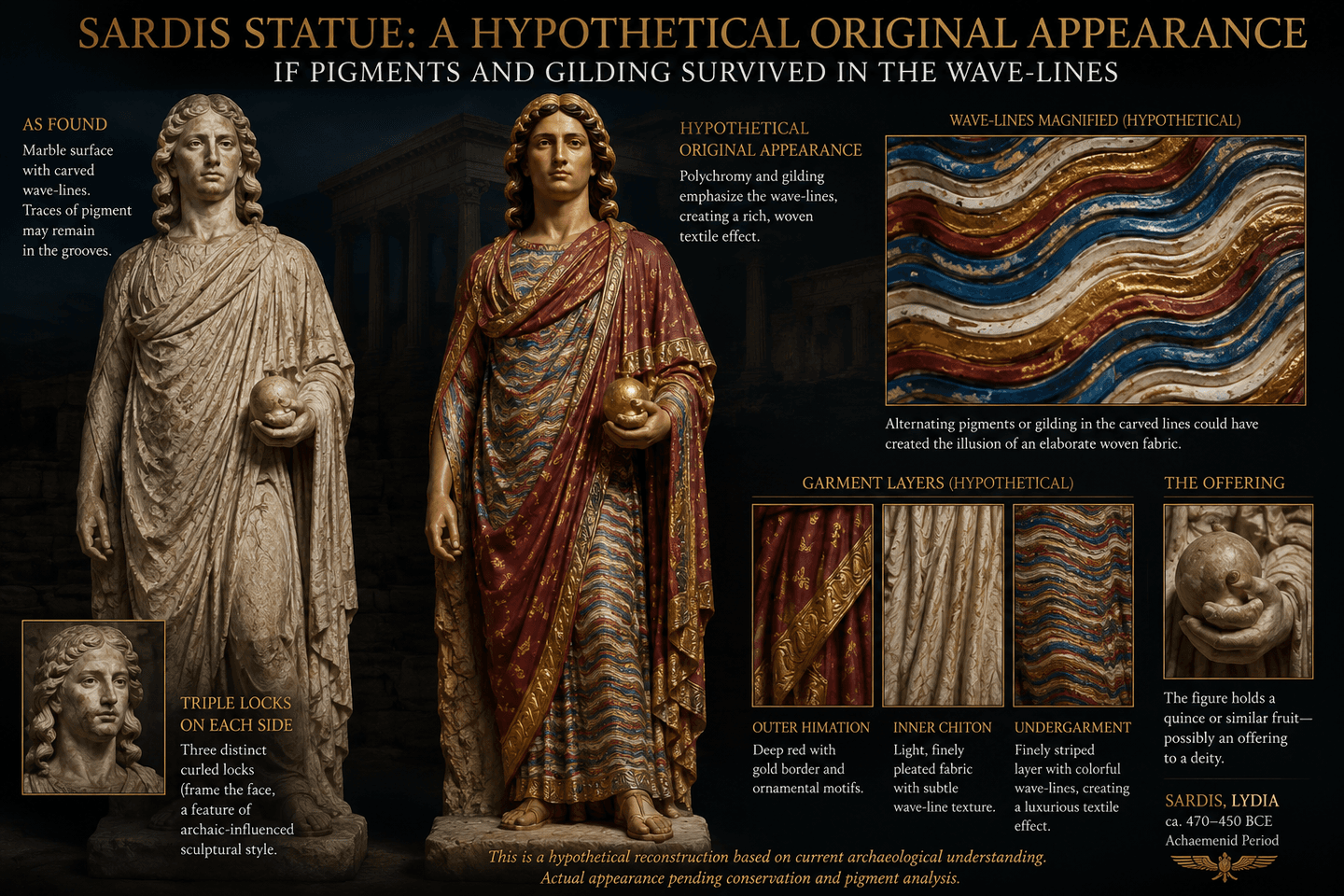
We must be precise here. There is presently no archaeological evidence demonstrating that the wavy lines at Sardis represent melammu. I am not claiming that there is. What I am proposing is a comparative hypothesis. The Sardis sculptors clearly developed a visual convention for depicting extremely fine garments through repeated undulating lines. The Mantle Wearer is an especially strong example. Another Sardian religious monument, associated in the excavation literature with Cybele, likewise depicts the upper chiton with fine linear wavy folds. To ancient eyes, however, such an extraordinary garment may have communicated more than textile technology. Imagine these sculptures as they originally appeared. They were not the monochromatic white objects we encounter in museums. Ancient sculpture was frequently colored. The incised channels and sculpted ridges could interact with pigment, light and shadow. If conservation eventually identifies pigments associated with the patterned areas of the newly discovered statue, we may get a dramatically different understanding of its original appearance. Instead of a white marble figure covered with curious grooves, imagine an elaborately colored garment in which alternating bands, folds or patterns created a shimmering surface. What did that shimmering surface communicate? That is the question I believe deserves investigation.
Sardis Stood Between Worlds
Location matters enormously. Sardis was not culturally isolated. It was the capital of Lydia and later existed within the Persian imperial world. The Sardis catalogue itself classifies several important sixth- and fifth-century sculptures as belonging to the Late Lydian (Persian) environment. This placed Sardis within one of the great corridors of cultural transmission connectingbMesopotamia, Persia, Anatolia, Ionia and Greece. Ideas traveled this road. People traveled it. Priests traveled it. Artistic conventions traveled it. Religious symbols traveled it. And concepts concerning divine kingship, sacred splendor and supernatural radiance could travel with them. This does not prove that the Lydians adopted the Mesopotamian doctrine of melammu. But it makes comparison historically reasonable. The people of Sardis lived at the meeting point of worlds in which radiance was a fundamental sign of divinity.
The Starwalker Interpretation
This is where I take the next step. My Starwalker hypothesis proposes that many ancient religious traditions preserve memories of a transformative process through which human beings sought to become more like the celestial beings they worshipped. Not metaphorically. Transformatively. The initiate entered one state and emerged in another. And one of the most persistent signs of that transformation was the acquisition of a new garment. From this perspective, melammu is not simply light. It represents a condition of being. The ordinary person does not radiate melammu. The divine or divinely empowered being does. This makes the garment one of the most important symbols in the Starwalker vocabulary. The garment tells us: This person is no longer what they were before.
From Melammu to the Robe of Glory
Follow this Golden Thread forward and something extraordinary happens.
Ancient Near Eastern traditions speak of divine splendor.
Jewish and Christian traditions develop elaborate concepts of glory.
Syriac Christianity speaks repeatedly of the Robe of Glory.
Early Christian texts describe humanity as having lost a primordial luminous condition associated with Adam and regaining it through Christ.
Paul speaks of “putting on Christ.”
Christian baptism itself becomes associated with receiving a new garment.
And the Transfiguration presents perhaps the most spectacular Christian expression of the idea. Jesus ascends the mountain. His appearance changes. His face shines. His clothing becomes supernaturally brilliant. The invisible identity becomes visible. This is precisely why I believe the Transfiguration is so important to the Starwalker story. It is not merely Jesus demonstrating supernatural power. It is a revelation of the transformed human form. The garment and the body participate in the same radiance.
And Then We Arrive Back at Sardis
Here the story takes an astonishing turn.
Melammu, Exousia and the Luminous Human
There is another dimension to this discovery that connects with my recent research. I have been comparing melammu with the New Testament Greek concept of exousia—divinely sanctioned authority. The distinction is fascinating. Exousia is what the transformed being possesses. Melammu is what divine presence looks like when it becomes manifest. One is authority. The other is radiance. One is invisible. The other makes the invisible visible. Put them together and we begin to recognize the ancient archetype I call the Starwalker: the human being who has become aligned with the divine order and consequently manifests a different quality of presence. This may help explain why sacred art across cultures continually surrounds extraordinary beings with halos, mandorlas, flames, stars, luminous garments and radiant fields.
Artists faced an impossible problem: How do you depict a human being who is more than ordinarily human? You make the invisible visible. You surround the body with light. Or perhaps... you make the garment itself come alive.
Look Again at the Sardis Statue
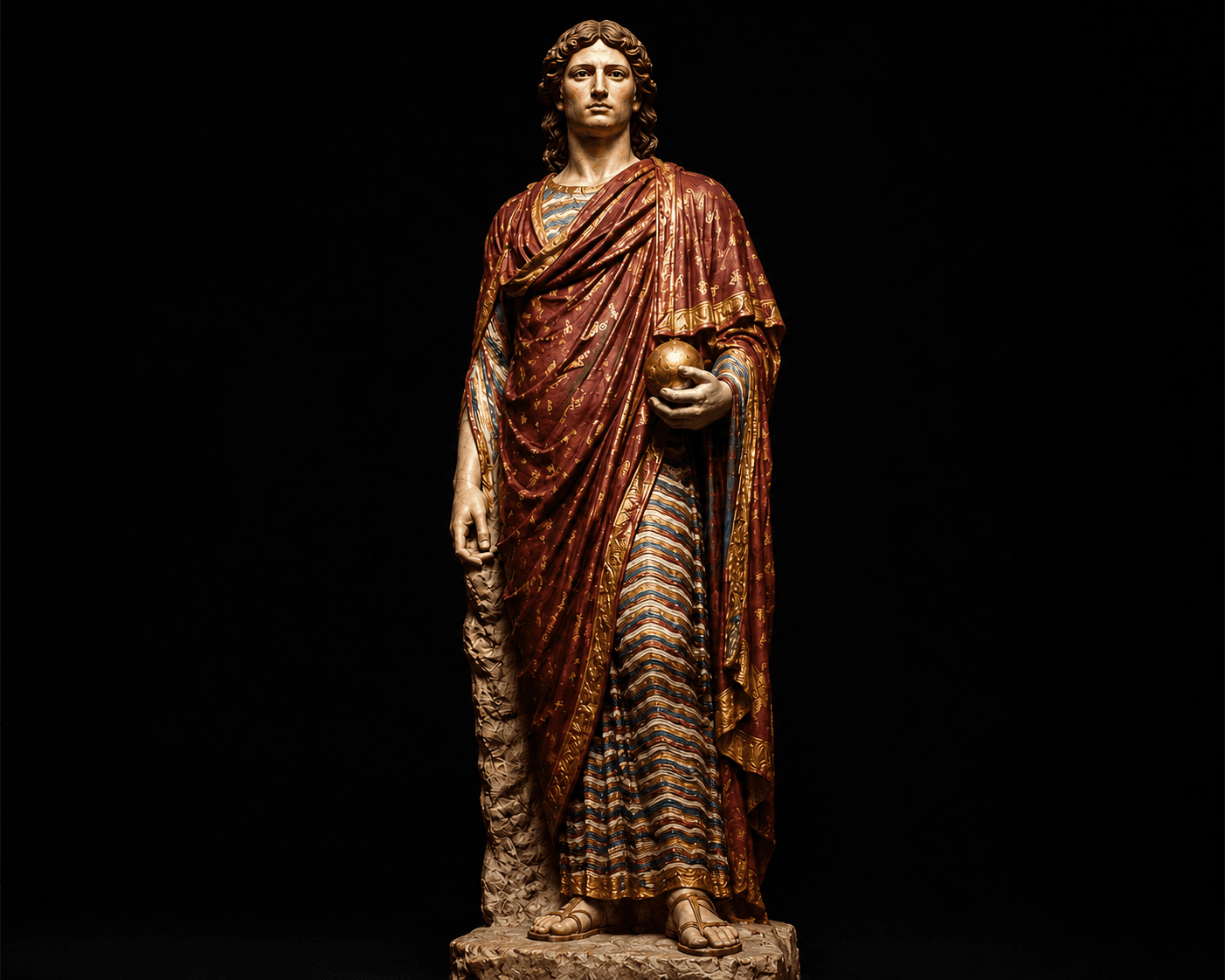
Now return to the newly discovered figure. Forget, momentarily, the museum-white marble. Imagine Sardis when the sculpture was new. Imagine sunlight striking polished stone. Imagine pigments. Imagine patterned textiles. Imagine gilding, if any were present. Imagine those hundreds of carved lines producing shifting highlights as the viewer moved around the figure. The garment might have appeared almost kinetic. Rippling. Shimmering. Alive. We do not yet know whether that was the effect. But we now know enough to ask the question. And sometimes archaeology advances because somebody asks a different question of familiar evidence.
A 2,500-Year-Old Message?
The greatest mistake would be to announce that archaeologists have discovered a statue wearing the melammu. They haven't. The greater opportunity is to recognize that the discovery gives us something much more intellectually productive: a physical object through which we can investigate how ancient people visualized extraordinary identity. What did sacred clothing communicate?
Why did Sardian sculptors repeatedly distinguish certain fine garments through waves and intensely carved linear patterns? How did those garments originally appear when painted?
Did patterned clothing distinguish social rank, ritual office, ethnic identity, divine association—or combinations of these? And how might this visual language relate to the wider Near Eastern concept of divine splendor?
Those questions are now worth asking.
Because the Starwalker hypothesis does not require us to abandon archaeology.
It asks us to look more closely at what archaeology has uncovered. The ancients repeatedly tell us that transformation involves putting something on. The Mesopotamians called divine radiance melammu. Later traditions spoke of the Robe of Glory. Christianity promised the Garment of Light.
And at Sardis—one of the most important crossroads between East and West—we now have another extraordinary figure whose identity is literally wrapped in an enigmatic, visually charged garment.
Perhaps it is only cloth.
Perhaps it signifies status.
Perhaps conservation will reveal colors that transform our understanding of the entire sculpture. But perhaps the deeper question is the one the ancient mystery traditions have been asking us all along:
What happens when the human being puts on the glory of the gods?
From the Starwalker perspective, that is not a question about fashion.
It is a question about human transformation.
And the newly uncovered figure at Sardis may have just given us a remarkable new place to look for the answer.
Pull on the Golden Thread.
About William Henry

William Henry is a Nashville-based author, investigative mythologist, and TV presenter. He is an internationally recognized authority on human spiritual potential, transformation and ascension.
He has a unique ability to incorporate historical, religious, spiritual, scientific, archaeological and other forms of such knowledge into factually-based theories and conclusions that provide the layperson with a more in-depth understanding of the profound shift we are actually experiencing in our lifetime.
Related Articles
From Dust to Spice
On Arrakis, spice hidden in the desert dust expands consciousness and enables humanity to travel between worlds. But Dune also warns that extraordinary powers, extended life and technological enhancement are not the same as spiritual transformation.
From Dust to Light
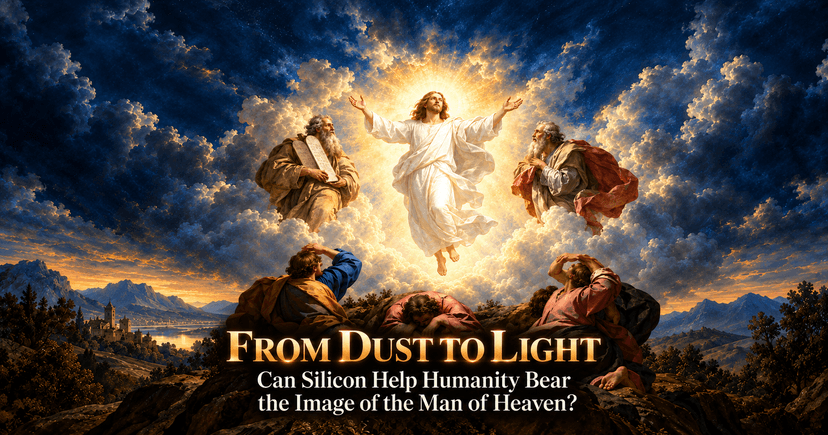
Humanity was formed from earthly dust and animated by divine breath. As carbon bodies become increasingly integrated with silicon intelligence, can technology help awaken our latent capacity for transformation—or will it merely create a convincing simulation of the human light body?
The Third Path
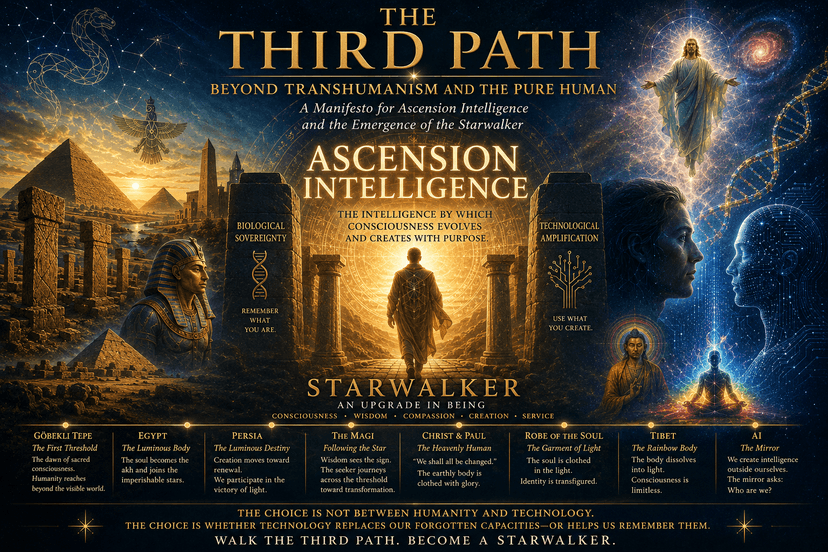
Humanity is being offered a false choice: remain biologically “pure” or merge with our machines. There is a Third Path—one that uses technology without surrendering to it, awakens the latent capacities of the human being, and points toward an ancient possibility: the emergence of the Starwalker.